Cremona Travel Guide: Stradivarius, Nougat & the Po Valley
Cremona travel guide: Stradivarius violins, the Torrazzo tower, torrone nougat, 150 luthier workshops, and Museo del Violino. Trains from Milan from €8.
Guides for Cremona
Cremona is a small Po Valley city known for two things: the finest violins ever made (Stradivari, Guarneri, and Amati all worked here), and torrone - the honey and almond nougat that is the city’s most famous food export. The historic centre has one of the finest Romanesque piazza complexes in Italy, and the city’s continuing tradition of violin-making (UNESCO Intangible Cultural Heritage since 2012) gives it a living cultural identity unlike any other Italian city of its size.
The Piazza del Comune
The central piazza contains an extraordinary ensemble of Romanesque and Gothic buildings - one of the most complete medieval civic squares in Lombardy.
The Duomo (Cathedral of Santa Maria Assunta, begun 1107) has a facade that accumulated decorative layers over several centuries - Romanesque base, Gothic rose window, Renaissance loggia. The interior has a remarkable cycle of 16th-century frescoes by Pordenone, Romanino, and Boccaccino. Free entry. Open daily 8am–12pm and 3:30pm–7pm.
The Battistero (Baptistery) opposite the cathedral is an octagonal 12th-century building, one of the finest baptisteries in Lombardy. Entry approximately €3 as of 2026.
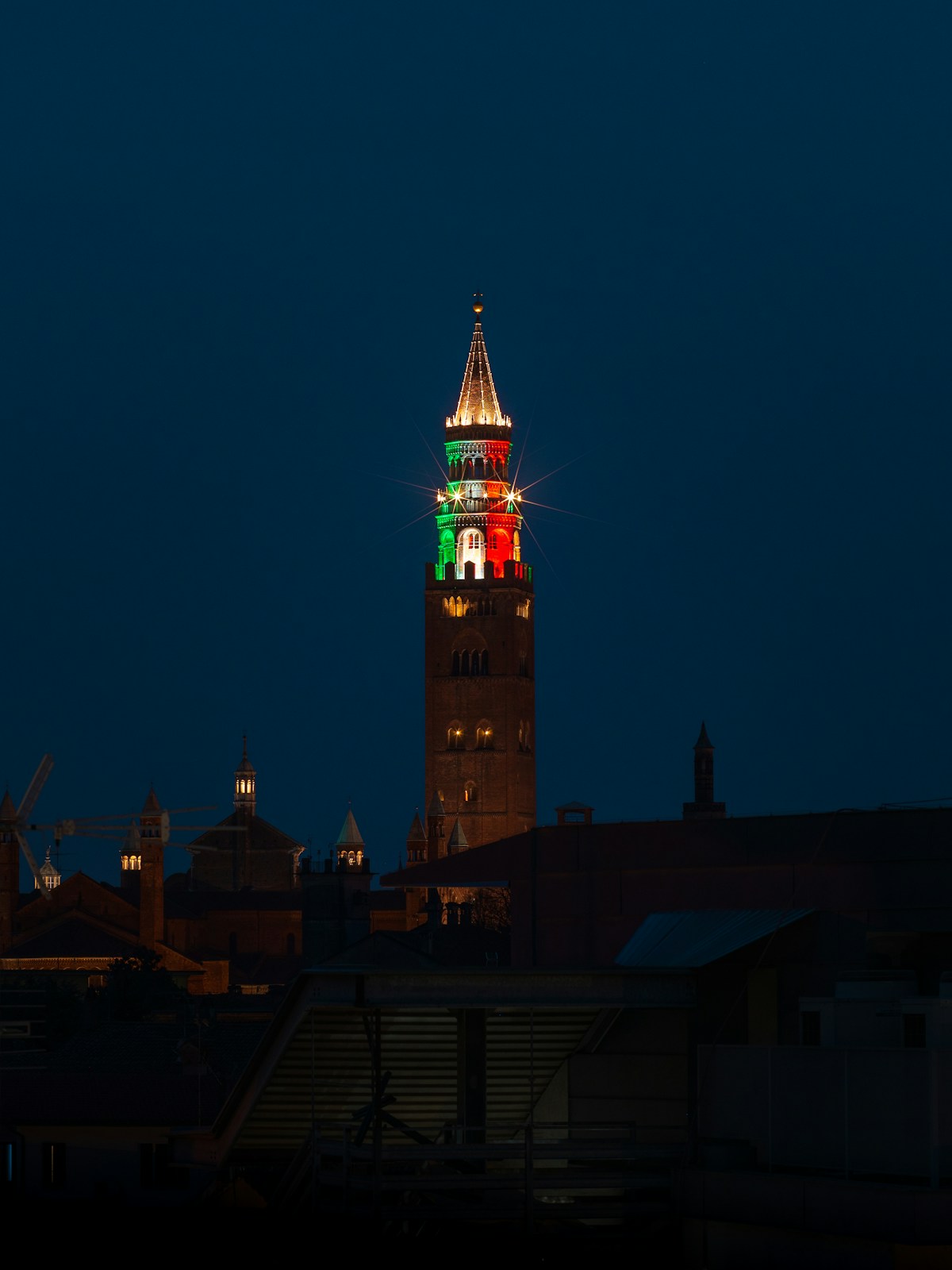
The Torrazzo - the campanile attached to the cathedral - is the tallest pre-modern bell tower in Italy at 112.7m and a symbol of the city. It can be climbed (502 steps) for views over the flat Po plain, extending to the Alps on clear days. Entry approximately €5. Open daily 10am–1pm and 2:30pm–6pm. The astronomical clock on the tower (1583) is one of the largest in the world.
The Palazzo del Comune (Town Hall) and the Loggia dei Militi (a 13th-century military loggia) complete the piazza ensemble.
The violin tradition
Cremona’s luthier tradition produced Antonio Stradivari (1644–1737), Giuseppe Guarneri del Gesù, and the Amati family - makers whose instruments are played by soloists worldwide and valued at millions of euros. The tradition is not merely historical: Cremona still has approximately 150 active violin workshops, concentrated in the streets around Piazza San Domenico.
Museo del Violino (Piazza Marconi 5) - The city’s showpiece museum, housed in the Palazzo dell’Arte. Displays original instruments by Stradivari, Guarneri, and Amati (including the Stradivari “Cremonese” of 1715). The museum includes a recreated Stradivari workshop, the history of violin-making from the 16th century to today, and an auditorium where the historic instruments are played during concerts. Entry approximately €10 as of 2026. Open Tuesday–Sunday 10am–6pm. The “Friends of Stradivari” concerts (check museodelviolino.org) use the museum’s instruments.
Botteghe di liuteria (violin workshops) - Several workshops welcome visitors. The Consorzio Liutai (Via Platina 17) can direct visitors to workshops open for tours. Book a guided Cremona tour to visit the Museo del Violino and a working luthier workshop with a local guide. Watching a luthier carve a violin top by hand is one of the most distinctive craft experiences in Italy.
Torrone
Cremona’s torrone (nougat made from honey, egg white, almonds, and hazelnuts) is considered the finest in Italy, with a tradition dating to the 15th century. The Festa del Torrone takes place in November - the city fills with nougat stands, demonstrations, and tastings. Year-round, the shops along the pedestrian Via Solferino sell every variation. Sperlari (Via Solferino 25, founded 1836) and Vergani are the most established producers. A box of Cremonese torrone makes one of the best food souvenirs from Italy.
Where to eat
Cremonese cuisine is Lombard-Emilian: marubini (stuffed pasta in broth - the local equivalent of tortellini), risotto alla pilota, bollito misto (mixed boiled meats with mostarda - fruit mustard relish, a Cremona speciality). Hosteria 700 (Piazza Gallina 1 - mains approximately €12–16) serves traditional Cremonese dishes. Trattoria Bisone (Via Pecorari 3 - mains approximately €10–14) is a local favourite for marubini in brodo.
Getting there
Cremona station: regional trains from Milan approximately 1 hour 20 minutes (approximately €8), from Brescia approximately 50 minutes (approximately €6). Cremona is a practical day trip from Milan, or a stop between Milan and Bologna (via Piacenza).
Practical details and planning
Best time to visit: The Festa del Torrone in November (usually the third week) is the most atmospheric time - the city centre fills with nougat producers, the historical pageant in medieval costume, and cooking demonstrations. The city is otherwise quiet and uncrowded year-round; there is no high tourist season as such.
How long to allow: Cremona’s centro storico is small. A half-day covers the Piazza del Comune, the Torrazzo climb, and the Museo del Violino comfortably. A full day allows time to visit workshop districts, browse Via Solferino for torrone, and eat properly.
Violin workshops: Not all workshops admit walk-in visitors. The International Violin Making School (Palazzo dell’Arte, where the museum is located) occasionally has open-studio days. The Consorzio Liutai lists workshops that accept visits at consorzio-liutai.cremona.it. Most workshops are concentrated in the streets south-east of the cathedral - Corso Garibaldi, Via Mozzanica, and Via della Piarda.
Where to stay
Cremona is most often visited as a day trip from Milan or Brescia, but there are adequate options for overnight stays:
Budget: Small hotels and B&Bs near the station from approximately €45–65/night. Agriturismo options in the surrounding Po plain farmland from approximately €60–80/night.
Mid-range: Hotel Impero (Piazza della Pace 21 - doubles from approximately €75/night as of 2026) is the most centrally located full-service hotel, a 5-minute walk from the Piazza del Comune. Dellearti Design Hotel (Via Bonomelli 8 - doubles from approximately €90/night) is a more design-focused option with modern rooms.
Higher-end: The converted palazzo options outside the city centre reach approximately €120–160/night. The city doesn’t have luxury five-star options; those visiting for a high-end experience typically base themselves in Milan (1h 20m away) or Mantua (50 minutes south-east by regional train, approximately €6) where more options exist.
For a full hotel guide: Cremona hotels. For violin museum details, workshop tours, and the Torrazzo: things to do in Cremona. For local food - marubini, risotto, and where to buy torrone: Cremona food guide. Cremona pairs well on a northern Italy itinerary alongside Milan and Bergamo.
Upcoming Events in Cremona
La Befana - Feast of the Epiphany 2027
La Befana 2027, January 6. Italy's Epiphany gift-giving day: children receive sweets or coal from the Befana witch, then decorations come down.
Book an experience
Top experiences in Cremona
Explore the best tours and activities in Cremona, with instant confirmation and free cancellation on most bookings.