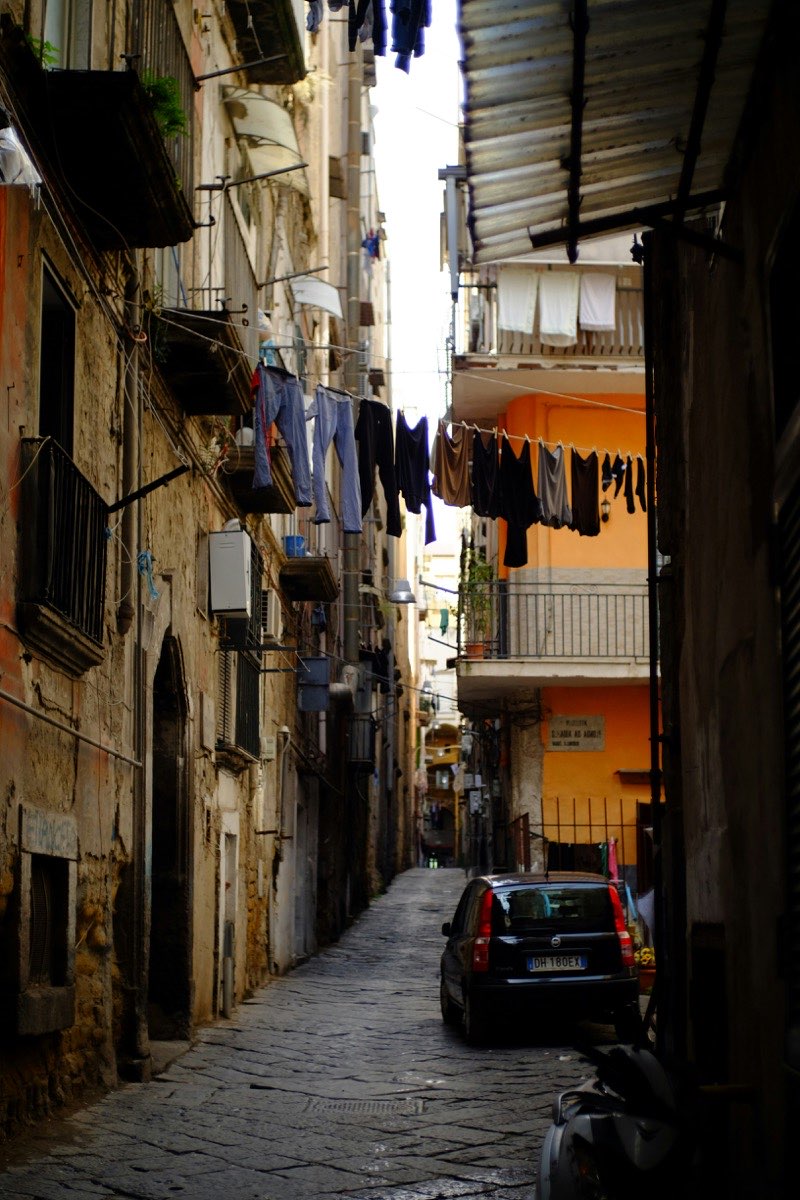
Naples is Italy’s most misunderstood city and its most undervalued extended-stay destination. While visitors queue for the Uffizi in Florence and pay premium rates for Trastevere apartments in Rome, Naples offers something rarer: a city of genuine magnitude — history, food culture, street life, proximity to some of the world’s most dramatic coastline — at a price point that makes a sustained stay affordable without compromise.
A month in Naples is not a relaxing, polished experience in the way that Tuscany is. The city is loud, chaotic at street level, and makes demands of its residents that most tourist cities do not. But those who invest the time to understand it consistently describe it as the Italian city that has changed them most.
This guide covers monthly and weekly rates by neighbourhood, the logistics of navigating the city as a longer-term resident, and what to expect as a remote worker.
Search Naples hotels on Booking.com to compare prices and check availability across all areas in this guide.
Weekly vs monthly rates: what to budget
Naples has Italy’s lowest rental costs among major cities, driven by the city’s high unemployment rate, large local housing stock, and a tourism market that has not yet raised short-term let prices to the levels seen in Venice or Florence.
Approximate Naples accommodation costs (as of 2026):
| Type | Per week | Per month |
|---|---|---|
| Studio — Chiaia / Posillipo | €700–1,100 | €900–1,500 |
| Furnished 1-bed — Chiaia | €800–1,300 | €1,000–1,700 |
| Studio — Vomero | €550–850 | €700–1,100 |
| Furnished 1-bed — Quartieri Spagnoli / Centro Storico | €400–700 | €600–950 |
| Extended-stay hotel suite (monthly rate) | — | €1,500–3,000 |
Utility costs in Naples are lower than northern Italian cities. Gas heating bills are minimal (milder climate); air conditioning costs in July–August are real but the sea breeze moderates heat significantly compared to Rome or Milan. Budget approximately €80–150 per month extra for utilities on direct rentals.
Chiaia: the best neighbourhood for international extended stays
Chiaia runs along the western waterfront from Piazza dei Martiri to the Mergellina harbour, with the Lungomare Caracciolo seafront promenade on one side and the Vomero hill on the other. It is Naples’ most prosperous and internationally connected neighbourhood — the restaurants are better, the coffee is (marginally) less chaotic, and the street-level experience is closer to a liveable Mediterranean city than the historic centre’s intensity.
Best for: Remote workers and professionals who want a base that is comfortable for a longer stay without sacrificing proximity to the city’s character. International visitors for whom personal safety and neighbourhood quality matter. Anyone who wants the Amalfi Coast and Capri ferry connections from Molo Beverello within 20 minutes by taxi.
Trade-off: Rents are Naples’ highest, though still significantly below Rome or Milan equivalents. The seafront area can be busy with traffic on weekend evenings.
Monthly furnished 1-bedroom apartments in Chiaia: €1,000–1,700. The streets north of Via Chiaia (toward the Vomero funicular) offer quieter residential character at the lower end of this range; the Lungomare-facing apartments carry a premium.
- Palazzo Caracciolo Naples — Historic palazzo hotel in the Piazza Calenda area (adjacent to the historic centre), well-positioned for access to both Chiaia and the city centre. Monthly rates available on request for 28+ day stays; ask directly. Rooms are substantially sized with proper desk space.
- Hotel Chiaja de Charme — Boutique hotel directly on Via Chiaia, the neighbourhood’s main thoroughfare, with period-furnished rooms and a genuinely attentive service approach. Good option for a 2–3 week stay; ask about weekly rates for 14+ nights.
Vomero: the residential hill neighbourhood
Vomero occupies the high ground above Chiaia — a plateau reached by three funicular railways (Chiaia, Montesanto, Centrale) that is entirely residential in character. It has none of the historic centre’s intensity, broad streets (unusual by Naples standards), good supermarkets, and a local café culture that is less tourist-contaminated than the centro storico.
Best for: Families. Remote workers who want quiet working conditions and cooler summer temperatures (the hilltop position gives meaningful relief from July–August heat). Longer stays of two to four months where liveability matters more than proximity to tourist sites.
Trade-off: Slightly removed from the city’s main cultural and food scene — the funicular ride adds 10–15 minutes to any journey to the historic centre. Less atmosphere than Chiaia.
Monthly furnished 1-bedroom apartments in Vomero: €700–1,100. Genuinely good value for an inner-city neighbourhood with this quality of infrastructure.
- Grand Hotel Parker’s — Historic hillside hotel on Corso Vittorio Emanuele, between Chiaia and Vomero, with panoramic bay views and a rooftop restaurant. A well-established option for longer stays — ask about extended rates for 21+ days. The location splits the difference between both neighbourhoods.
Quartieri Spagnoli and Centro Storico: the authentic Naples experience
The Spanish Quarter (Quartieri Spagnoli) and the UNESCO-listed historic centre (Centro Storico) are where Naples is most purely itself. Dense, vertical, layered — buildings that have been continuously inhabited for centuries, pizzerias that have been operating for generations, and a street life that operates on its own terms regardless of tourist presence.
Best for: Visitors who specifically want immersion in the city’s actual character, have experience with dense southern European urban environments, and are staying long enough (a month or more) to understand the neighbourhood rather than simply navigating it.
Trade-off: Noise is significant — especially on the lower streets at night. Apartment quality is variable; inspect carefully before committing. Some areas require more street awareness than Chiaia or Vomero.
Monthly furnished apartments in the Quartieri Spagnoli: €600–950 for a 1-bedroom. The Centro Storico, around Via Tribunali and Via dei Tribunali, is similar pricing. Above Spaccanapoli in the higher streets (Via Anticaglia, Piazzetta Nilo) you find quieter territory at the same price range.
- Decumani Hotel de Charme — Boutique hotel in a 17th-century cardinal’s residence in the Centro Storico, offering genuine atmosphere and a well-preserved historic property. Ask about extended-stay rates for 14+ days — the hotel accommodates longer visits and can negotiate meaningfully below rack rates for weekly bookings.
- Costantinopoli 104 — Small boutique hotel inside a historic palazzo in the archaeological museum area, with a pool (rare in Naples) and a garden courtyard. Rooms have genuine character. Extended-stay guests can negotiate weekly rates directly.
Posillipo: coastal hill, highest rents
Posillipo is the elevated coastal promontory west of Chiaia — the most scenic residential area in the Naples metropolitan area, with views across the bay toward Vesuvius and the islands. It is predominantly villa and apartment territory, used by Neapolitan professionals and wealthier expats.
Monthly 1-bedroom apartments in Posillipo: €1,200–2,000 — the most expensive neighbourhood in Naples, though still affordable compared to Rome’s equivalent coastal areas. Transport into the centre is by bus (slower) or taxi; the isolation is part of the appeal for longer stays.
Cost comparison: Chiaia vs Quartieri Spagnoli for one month (solo remote worker)
| Item | Chiaia | Quartieri Spagnoli |
|---|---|---|
| 1-bed furnished apartment | €1,100–1,500 | €650–900 |
| Food (market + pizza + restaurant 4× per week) | €300–450 | €250–380 |
| Transport (metro + bus monthly pass) | €42 | €42 |
| Coworking (10 days) | €150–280 | €150–280 |
| Monthly total | €1,592–2,272 | €1,092–1,602 |
At approximately €500–700 less per month, the Quartieri Spagnoli represents remarkable value — the trade-off is purely one of neighbourhood environment rather than access to the city’s food and culture.
Digital nomad logistics in Naples
Coworking: Naples’ coworking scene has grown significantly since 2022. The main spaces are Make It Naples (near Piazza del Gesù), Impact Hub Naples (in the Centro Direzionale business district, accessible by metro), and Cowo Napoli (Chiaia). Day passes from approximately €15–25; monthly hot-desk from approximately €100–180 — the most affordable coworking rates of any major Italian city.
Internet: Fibre broadband is being rolled out across Naples faster than the city’s reputation for infrastructure suggests — FTTH is available in most new buildings and many older apartment blocks in Chiaia and Vomero. Older historic centre buildings (thick tuff stone construction) can have more variable performance. TIM and Fastweb are the dominant providers; confirm speeds with landlords before committing.
SIM card: Iliad (unlimited data, approximately €7.99/month) and Wind Tre are both widely available at tabacchi throughout Naples. Wind Tre has the strongest network coverage in the Campania region, including along the Amalfi Coast — useful if you are working remotely from day-trip locations.
Healthcare: Ospedale del Mare (eastern Naples) and the Cardarelli Hospital are the main public facilities — EHIC covers EU citizens. Clinica Mediterranea in Posillipo is the preferred private facility for international patients and handles English-language consultations.
Grocery: The Pignasecca market (Montesanto) is Naples’ best everyday food market — excellent seafood, vegetables, and local products at genuinely local prices. La Pignasecca is open every morning except Sunday. Conad and Carrefour supermarkets are distributed through Chiaia and Vomero. For specialty products, Eataly Napoli (on Piazza Garibaldi) covers upscale imports.
Getting around Naples on a long stay
Naples’ public transport is more functional than its reputation. The metro (Line 1 and Line 2) covers the main east-west axis; the three funicular railways link the waterfront to Vomero; and a dense bus network covers the rest. A monthly transport pass costs approximately €42 and covers all modes.
Scooter hire is common among long-stay residents but requires comfort with Neapolitan traffic culture. Cycling is not recommended in the historic centre but viable along the Lungomare.
For day trips to Pompeii (25 minutes, €2.80 by Circumvesuviana), the Amalfi Coast (bus or ferry from Molo Beverello), and Capri (ferry from Molo Beverello, approximately €22 each way), Naples provides an extraordinarily well-positioned base.
Which neighbourhood should you choose?
Choose Chiaia if: You want the most comfortable, internationally legible version of extended-stay Naples. Best balance of neighbourhood quality, food access, and proximity to the city’s main attractions.
Choose Vomero if: You are staying two months or more and prioritise quiet, cool air in summer, and a genuinely residential atmosphere. Best for families and those who do most of their work from home.
Choose the Quartieri Spagnoli or Centro Storico if: You want the full Neapolitan experience and are comfortable navigating dense urban environments. The most rewarding choice for anyone who wants to understand the city at depth, and by far the most affordable.
Choose Posillipo if: You want sea views, the most scenic residential setting, and are comfortable with slightly more complex transport routing into the centre.
For most remote workers making a first extended stay in Naples, Chiaia provides the most straightforward entry point — comfortable infrastructure, safe neighbourhood, and close enough to the historic centre to spend real time there without living inside it. For the more adventurous or budget-focused, the Quartieri Spagnoli offers an experience of Naples that is simply unavailable at this price point anywhere else in Italy.
Search serviced apartments and hotels in Naples on Booking.com to compare monthly rates and availability across Chiaia, Vomero, and the historic centre.