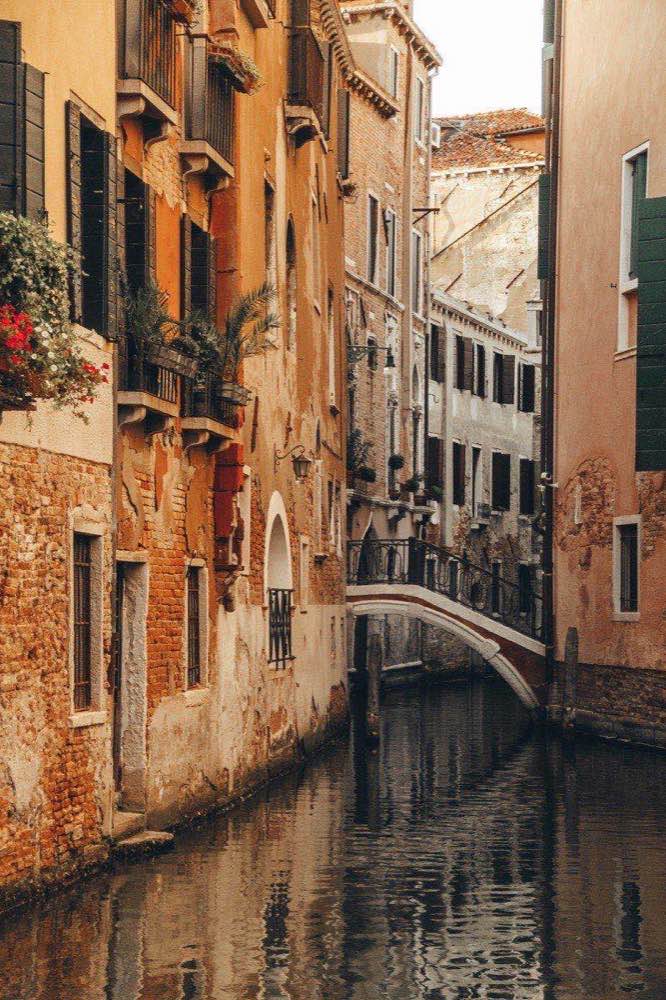
Venice is the most misunderstood city in Italy for extended stays. Every visitor assumes it will be expensive, crowded, and impractical — and for the first three days, navigating the tourist circuits, it is. By the second week, when you have found your local bacaro, discovered the shortcut through Cannaregio to the Rialto fish market, and stopped arriving at the vaporetto stop at the same time as the cruise excursions, the city reveals a completely different character. A long stay in Venice is among the most distinctive experiences available in Italy.
This guide covers monthly and weekly rates by sestiere, the logistics of living without cars, and what to expect as a remote worker staying a month or more.
Search Venice hotels on Booking.com to compare prices and check availability across all areas in this guide.
Weekly vs monthly rates: what to budget
Venice’s rental market is expensive and supply-constrained. The city’s holiday-let market is very large (short-term tourist lets have displaced a significant portion of the long-term rental stock), which inflates prices and limits availability. Planning ahead — four to eight weeks minimum — is essential.
Approximate Venice accommodation costs (as of 2026):
| Type | Per week | Per month |
|---|---|---|
| Studio — central sestieri (Dorsoduro, Cannaregio) | €1,100–1,800 | €1,500–2,500 |
| Furnished 1-bed — central | €1,400–2,200 | €2,000–3,500 |
| Studio — Giudecca island | €700–1,100 | €1,100–1,800 |
| Furnished 1-bed — Mestre (mainland) | €400–650 | €700–1,100 |
| Extended-stay hotel suite (monthly rate) | — | €2,800–5,000 |
The vaporetto (water bus) is the essential transport cost. A monthly vaporetto pass costs approximately €35 (resident rate) or €55–65 at tourist rates — confirm your eligibility with ACTV before purchasing. This replaces entirely the need for any other urban transport, including taxis.
Dorsoduro: the neighbourhood of choice for long stays
Dorsoduro is the sestiere that most visitors do not discover on a short trip, and the one that extended-stay regulars return to specifically. It sits at the southern tip of the main island, facing the Giudecca Canal, with the Gallerie dell’Accademia and the Peggy Guggenheim Collection on its waterfront. The Zattere promenade is the most pleasant walking route in Venice for morning coffee or evening aperitivo.
Best for: Anyone staying a month or more who wants neighbourhood character and distance from the tourist core. Remote workers who value the university (Ca’ Foscari) proximity for coworking options. Art and culture-focused extended stays.
Trade-off: Rents are not cheap even by Venetian standards in the best streets. Apartment inventory turns slowly — early searching is essential.
Monthly furnished apartments in Dorsoduro: €1,500–2,400 for a studio, €2,000–3,200 for a 1-bedroom. Streets near Campo Santa Margherita (the main neighbourhood square, lined with student bars and a weekly market) command a premium and offer maximum atmosphere.
- Pensione Accademia Villa Maravege — One of Venice’s most distinctive boutique hotels, set in a genuine Venetian villa with a garden (rare in Venice) backing onto a canal. Rooms have a genuinely residential feel. Ask about extended-stay rates for stays of 21+ days.
- Ca’ Pisani Hotel — Design hotel near the Accademia with spacious rooms and a roof terrace, suited to extended stays of 2–4 weeks. Negotiated monthly rates available on request — expect approximately €2,500–3,800 for a junior suite on long-stay pricing.
Cannaregio: most liveable for day-to-day life
Cannaregio is Venice’s largest and most populous sestiere, and the one that functions most like a real Italian neighbourhood rather than a tourist attraction. The area north of the Jewish Ghetto and along the Fondamenta Nuove offers a genuinely Venetian residential experience — neighbourhood markets, local cafés where tourists rarely appear, and the least Venice-specific rents in the central islands.
Best for: Families, solo visitors wanting an immersive local experience, anyone for whom everyday practicality matters — Cannaregio has the best supermarket access and the most local shops of any central sestiere.
Trade-off: The Lista di Spagna (the main tourist artery from the train station) is one of the worst tourist streets in Venice. Avoid apartments directly on or immediately adjacent to it.
Monthly furnished apartments in Cannaregio: €1,200–2,000 for a studio or small 1-bedroom. The streets toward Fondamenta Nuove and the northern lagoon edge are genuinely quiet and local in character, at the lower end of this range.
- Hotel Hesperia — Family-run hotel in northern Cannaregio, away from the tourist circuits, offering genuine monthly-rate negotiation for extended stays. Well-positioned for the Fondamenta Nuove vaporetto to the outer islands.
- Hotel Giorgione — Four-star hotel in central Cannaregio with a courtyard garden — rare in Venice. A good option for a 2–4 week stay at standard booking rates; ask about weekly discounts directly for 14+ night stays.
Castello: the quietest central sestiere
Castello extends east from San Marco to the Arsenal and the more residential streets of Sant’Elena. The western portion (around San Zaccaria and San Giovanni in Bragora) still sees tourist foot traffic; the eastern stretch toward the Biennale gardens and Sant’Elena is genuinely local territory.
Best for: Visitors who want to be close to San Marco without paying San Marco prices. Families who need more space and quieter streets. Those attending the Venice Biennale for extended professional stays.
Monthly furnished apartments in Castello: €1,300–2,100 centrally, dropping to €1,000–1,600 in the eastern residential areas toward Sant’Elena.
- Hotel Londra Palace — On the Riva degli Schiavoni waterfront with lagoon views and spacious rooms. Primarily a standard hotel rather than extended-stay, but 14+ night stays receive better nightly rates — ask directly.
Giudecca: the most affordable central option
Giudecca sits just across the canal from Dorsoduro — a five-minute vaporetto ride from the main islands — but feels distinctly different: quieter, more residential, lower tourist density. It has historically been a working-class island and retains that character in much of its housing stock. The northern waterfront (facing Dorsoduro) is developing with restaurant and bar openings, but the southern side remains genuinely unchanged.
Best for: Budget-conscious extended stays who want to be on the islands. Artists, writers, and others who value quiet and unusual character. Stays of one month or more where the slightly more complex transport routing becomes routine.
Monthly furnished apartments on Giudecca: €1,100–1,800 — genuinely the lowest rents available in the Venetian lagoon without going to Mestre on the mainland.
- Bauer Palladio Hotel & Spa — Set in a former Palladian convent on Giudecca with garden and spa. One of Venice’s most atmospheric hotel stays — not the cheapest, but monthly rates for long-stay guests offer meaningful reductions on rack rates. Private boat to San Marco included.
Mestre: the mainland alternative
Mestre, Venice’s mainland district, gets overlooked by visitors who want to be “on the island.” For extended stays of two months or more, it deserves serious consideration: rents are 40–60% lower than central Venice, supermarket access is excellent, and the Mestre–Santa Lucia train (9 minutes, €1.50 each way) runs every 10–15 minutes throughout the day.
Monthly 1-bedroom furnished apartments in Mestre: €700–1,100. Neighbourhood character varies significantly — Piazza Ferretto (the main pedestrian square) is the most pleasant area; the suburbs around the commercial areas are less atmospheric.
Cost comparison: Dorsoduro vs Mestre for one month (solo remote worker)
| Item | Dorsoduro | Mestre |
|---|---|---|
| Studio furnished apartment | €1,600–2,100 | €750–1,000 |
| Food (market + eating out 3× per week) | €380–560 | €320–480 |
| Transport (vaporetto monthly or train) | €55 (tourist pass) | €50 (train) |
| Coworking (12 days) | €200–360 | €180–300 |
| Monthly total | €2,235–3,075 | €1,300–1,830 |
The Mestre saving of approximately €900–1,200 per month is substantial. The trade-off is the 10–15 minute commute for every trip into Venice proper — which at daily frequency across a month accumulates to significant travel time.
Digital nomad logistics in Venice
Internet: Fibre broadband has reached most Venetian buildings — FTTH coverage is better than Venice’s reputation for infrastructure would suggest. The main problem is internal building Wi-Fi distribution: thick stone walls, irregular building layouts, and old electrical infrastructure create dead spots. Test your specific apartment connection speed before committing to a month.
Coworking: Venice’s coworking scene is smaller than other Italian cities but growing. The city’s Ca’ Foscari University area in Dorsoduro has informal coworking arrangements at a handful of cafés. Veneto Innovation’s coworking space near the Arsenale and a few independent spaces in Mestre provide the most reliable options. Day passes from approximately €20–35. Mestre has more established coworking provision for the price.
SIM card: Wind Tre, Iliad, and Vodafone Italy all offer 30-day unlimited data SIMs for €7–15. Pick up at the Mestre train station operators’ shops or at tabacchi throughout the city.
Healthcare: ULSS 3 Serenissima covers the Venice area — EHIC covers EU citizens at Ospedale Civile (Santi Giovanni e Paolo), which is accessible by vaporetto Line 4.2. Private medical options are limited compared to mainland cities — factor travel to Mestre or Padua for specialist consultations.
Grocery: The Rialto market is Venice’s best food source for fresh produce, open every morning except Sunday. For everyday household shopping, Billa supermarkets operate within Venice; the larger Conad and Carrefour stores are in Mestre.
Which area should you choose?
Choose Dorsoduro if: You want the best neighbourhood character in Venice and are staying a month or more. The most rewarding extended stay for anyone who values atmosphere, the university scene, and proximity to the best wine bars.
Choose Cannaregio if: You prioritise day-to-day practicality — good shops, local market, neighbourhood feel — over proximity to the main monuments. Better for families and longer stays.
Choose Giudecca if: Budget matters and you are comfortable with the island-to-island vaporetto as part of your daily routine. The most distinctive experience of the options available.
Choose Mestre if: You need the lowest costs and are pragmatic about the commute. Best for stays of two months or more where the monthly savings accumulate significantly.
For most first-time extended stays in Venice, Dorsoduro or Cannaregio offer the most complete immersion in the city at reasonable (by Venetian standards) prices. Plan your accommodation search 6–8 weeks in advance — Venice’s rental market is tight and the best apartments move quickly.
Search long-stay apartments and hotels in Venice on Booking.com to compare monthly rates and availability across Dorsoduro, Cannaregio, and Giudecca.