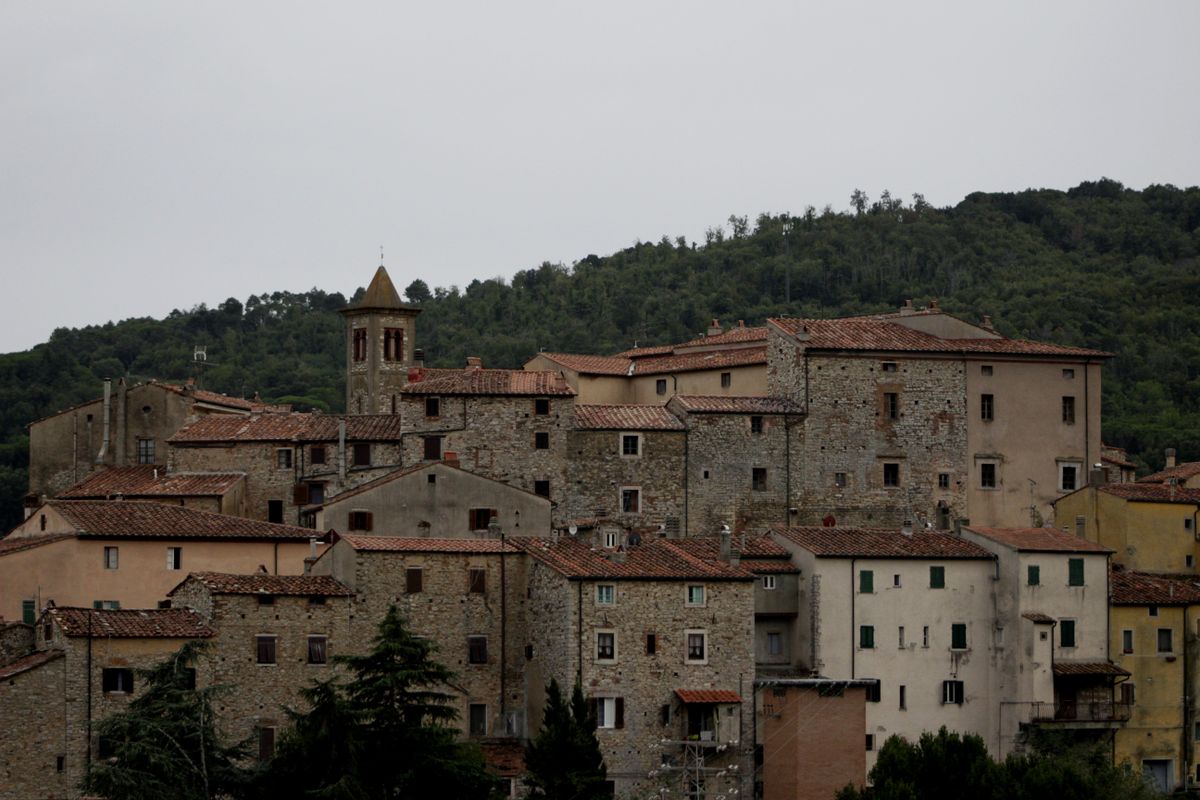
Cortona sits on the steep southern flank of an Etruscan hilltop at around 600 metres, with views across the broad Val di Chiana plains to the southeast and Lake Trasimeno visible on clear days to the south. The town’s claim to international attention comes partly from the Frances Mayes memoir Under the Tuscan Sun (1996), which brought sustained anglophone visitors for two decades. But Cortona’s real draw is older than that: Etruscan walls, one of the best small museums in Tuscany (the MAEC, housing one of Italy’s finest Etruscan collections), and a quality of evening light over the Val di Chiana that painters and photographers have been coming for since the Renaissance.
The historic centre is compact but steep. Piazza della Repubblica and Piazza Signorelli at the base are the commercial hub; the streets climb sharply from there toward the Church of San Cristoforo and the fortress at the top. The best views — and the quietest streets — are in the upper town.
Search all Cortona hotels on Booking.com to compare prices and availability across the areas in this guide.
Piazza della Repubblica and the Lower Historic Centre
The main piazzas at the base of the historic centre — Piazza della Repubblica and the adjacent Piazza Signorelli — are the social hub of Cortona. The best restaurants, the MAEC museum (Piazza Signorelli), and the main bars are concentrated here. Hotels in this zone are the most central for sightseeing but also the busiest during peak visitor hours.
Luxury (€200–350/night): Hotel San Michele (Via Guelfa 15) occupies a 15th-century Renaissance palazzo a short walk from Piazza della Repubblica. Stone-vaulted ceilings, terracotta floors, and a courtyard garden characterise the interior. Forty rooms, some with Val di Chiana views. Doubles from approximately €180/night as of 2026; suites from €250. Restaurant on site serving Tuscan cuisine with produce from the surrounding area.
Mid-range (€110–170/night): Several three-star hotels and converted palazzi operate in the lower historic centre. Look for properties on Via Nazionale — the main pedestrian street connecting Piazza Garibaldi to Piazza della Repubblica. These tend to be family-run, with 10–20 rooms, no restaurant but good breakfast service, and helpful owners who can direct you to the less-visited parts of town.
Budget (€90–120/night): Ostello San Marco (Via Maffei 57) provides budget accommodation in the historic centre — dormitory and private room options, popular with younger travellers and those doing the Via di Francesco pilgrim route. Doubles from approximately €90/night as of 2026 for a private room with shared bathroom.
The Upper Town — Via Berrettini and Above
The upper sections of Cortona — above Via Berrettini, toward the Church of San Niccolò and the Fortezza Medicea — are the quietest and most residential. Streets here are narrower, the tourism pressure is lower, and the views become progressively more dramatic. This is the area for visitors who want an authentic neighbourhood experience rather than proximity to the main museums.
Boutique mid-range (€120–200/night): Casa Bellavista and similar small boutique properties in the upper town offer five to eight rooms in historic buildings, often with private terraces or garden access. Views from these properties across the Val di Chiana can be remarkable. Several operate seasonally (March–November). Doubles from approximately €130/night as of 2026.
Countryside — Below Cortona and the Lake Trasimeno Area
The plain below Cortona — Camucia and the Val di Chiana — has the town’s train station (Camucia-Cortona) and several budget hotels practical for arriving by rail. The countryside between Cortona and Lake Trasimeno (25km south) also has good agriturismo options.
Countryside luxury (€180–350/night): Villa di Piazzano (Localita Piazzano) sits in the countryside northwest of Cortona with pool, gardens, and a restaurant using estate produce. The 16th-century villa has been a country house hotel for three decades and maintains a loyal repeat clientele. Doubles from approximately €180/night as of 2026.
Budget near the station (€70–100/night): The Camucia-Cortona area has a handful of two-star hotels and B&Bs that offer a practical base at a lower price point, with the train station walkable. The shuttle bus to the historic centre runs regularly from the station. Suitable for visitors who don’t need to be in the old town after restaurant hours.
Practical Notes
Getting there by rail: Cortona’s station — Camucia-Cortona — sits in the plain 3km below the historic centre. Trains from Florence (approximately 1 hour 30 minutes) and Rome (approximately 2 hours) stop here. From the station, the LAM shuttle bus runs up to the historic centre (15–20 minutes). Taxis are available at the station rank.
MAEC museum: The Museo dell’Accademia Etrusca e della Città di Cortona (Piazza Signorelli) holds one of Italy’s most important Etruscan collections, including the extraordinary bronze lamp (lucerna etrusca) from the 4th century BC. Budget at least 90 minutes. Closed Mondays.
Antiques Fair: Cortona’s Mostra dell’Antiquariato runs over two weekends each August (specific dates vary by year). The fair fills the streets with dealers from across Italy and draws serious collectors. Hotels book out months in advance during these weekends — prices are typically double standard rates.
Day trips: Montepulciano is 45km southeast (50 minutes by car). Arezzo is 30km north (35 minutes). Lake Trasimeno is 25km south and accessible by the secondary road through Castiglione del Lago. Assisi is 60km east via the A1 motorway.