Florence sits in Emilia-Romagna’s shadow when it comes to food reputation - Bologna is officially Italy’s food capital - but Tuscany’s cuisine is deeply serious and distinctively its own. The meat tradition is extraordinary (Chianina beef, porchetta, cured meats from Greve in Chianti), the bean and bread soups are some of the finest peasant food in Europe, and the bread itself is famously saltless, which takes some adjustment.
The essential dishes
Bistecca alla Fiorentina - A thick-cut T-bone from Chianina cattle (a white breed native to the Arno Valley), grilled over hardwood or charcoal and served rare. The cut is at minimum 4cm thick and is sold by weight - typically 800g to 1.2kg per steak, so it’s usually shared between two. A proper one is expensive: approximately €45–70 depending on weight, as of 2026. Doing it cheaply with inferior beef is not worth it. The steak should be seasoned only with salt, olive oil, and possibly a squeeze of lemon. If it arrives well-done, send it back.
Lampredotto - A tripe sandwich made from the fourth stomach of a cow, slow-cooked in broth with parsley, onion, and tomato. Served in a bread roll (the top dipped in the cooking broth - ask for it “bagnato”) with salsa verde (green parsley sauce) and chili oil. It is a Florentine street food eaten standing up, typically for lunch, from market stalls and trippai (tripe vendors). Approximately €4–5 per sandwich.
Ribollita - Tuscany’s most famous soup: cannellini beans, cavolo nero (black kale), stale bread, olive oil, and whatever vegetables are available. It’s made the day before and reboiled (hence the name). At its best in autumn and winter when cavolo nero is in season. Approximately €8–12 at trattorias.
Pappa al pomodoro - Another Tuscan bread soup, this one with tomatoes, olive oil, garlic, and basil. Summer dish, served warm or at room temperature. Approximately €8–10 at trattorias.
Pici - Thick hand-rolled pasta, wider than spaghetti, rough in texture. Served with cacio e pepe, wild boar ragù (cinghiale), or a simple garlic and olive oil sauce (aglio e olio). Made by hand in every farmhouse kitchen in Tuscany. Approximately €10–14 at trattorias.
Schiacciata - Florentine flatbread, similar to focaccia but thinner and crisper. The plain version with olive oil and salt is available at every bakery (approximately €1.50–3 per piece). Schiacciata con l’uva (with wine grapes) appears in September during grape harvest - one of Tuscany’s best seasonal treats.
Where to eat well
For bistecca
Trattoria dall’Oste (Via Luigi Alamanni 3r, near Santa Maria Novella) - Excellent Chianina bistecca sold by weight. Bistecca approximately €50–65/kg, a typical steak for two costs approximately €45–55. Reservations essential for dinner. Pasta dishes approximately €10–12 as a first course. Open daily for lunch and dinner.
Buca Mario (Piazza degli Ottaviani 16r, near Santa Maria Novella) - Operating since 1886 in a vaulted cellar. Bistecca approximately €55–70/kg. Traditional Florentine service. Full dinner with bistecca, contorno, and wine approximately €50–65 per person. Reservations essential. Closed Wednesday.
Perseus (Viale Don Minzoni 10r, near Piazza della Libertà) - A local favourite away from the tourist centre. Bistecca approximately €45–55/kg - slightly cheaper than the central trattorias. Generous portions. Reservations essential, especially weekends. Closed Sunday.
For traditional Tuscan
Trattoria Mario (Via Rosina 2r, near the Mercato Centrale) - Open since 1953, communal tables, no reservations - arrive before noon or queue. Pasta approximately €7–9, secondo approximately €8–12. Full lunch approximately €15–20 per person. Cash only. Closed Sunday and evenings. One of the best-value meals in central Florence.
Trattoria Sabatino (Via Pisana 2r, Oltrarno) - A workers’ trattoria that has barely changed in decades. Pasta approximately €5–7, secondo approximately €7–10, house wine approximately €4 per litre. Full meal approximately €12–15 per person. No English menu - point or ask. Cash only. Closed Saturday and Sunday.
Il Latini (Via dei Palchetti 6r, Centro Storico) - A landmark trattoria with hanging prosciutti and large shared tables. Bistecca, ribollita, and Chianti in generous portions. Set-menu style with antipasti, pasta, meat, and dessert - approximately €40–50 per person including wine. Reservations essential. Closed Monday.
For lampredotto
Nerbone (inside Mercato Centrale, San Lorenzo) - The most famous lampredotto stand in Florence, operating since 1872. Lampredotto sandwich approximately €4.50. Also serves bollito (boiled beef) sandwiches and plates of pasta. Open Monday–Saturday from 7am. Cash preferred.
L’Antico Trippaio (Piazza dei Cimatori, Centro Storico) - A tripe cart in the centre that serves lampredotto and trippa (tripe). Sandwiches approximately €4–5. Open for lunch only. Look for the white van-cart.
Trippaia di Piazza dei Ciompi (Piazza dei Ciompi, Santa Croce) - Another excellent tripe cart near the flea market. Lampredotto approximately €4.50. The green sauce here is exceptional. Open lunch hours, closed Sunday.
The saltless bread issue
Florentine (and Tuscan generally) bread contains no salt. This is historical - during a 12th-century trade war with Pisa, salt supplies to Florence were cut off, and bakers adapted. The bread tastes flat on its own but functions as a vehicle for the strongly-flavoured toppings, soups, and stews it accompanies. The fettunta (toasted bread rubbed with garlic and drizzled with new-season olive oil) demonstrates why the bread works. Adjust your expectations rather than complaining to the restaurant.
Markets
Mercato Centrale (Piazza del Mercato Centrale, San Lorenzo) - The main covered market. Ground floor for raw produce: butchers, cheesemongers, fishmongers, fruit and vegetable stalls. Open Monday–Saturday 7am–2pm. The upper floor is a modern food hall with prepared food - pizza, pasta, gelato, wine bars - open daily until midnight. Good for lunch (individual dishes approximately €8–15) but more expensive than the ground floor.
Mercato di Sant’Ambrogio (Piazza Sant’Ambrogio) - Smaller, more local, and less touristed. Fresh produce at genuine local prices. Several food stalls serve excellent lunch - Da Rocco (inside the market) does full plates of Tuscan food for approximately €8–10. Open Monday–Saturday mornings until 2pm.
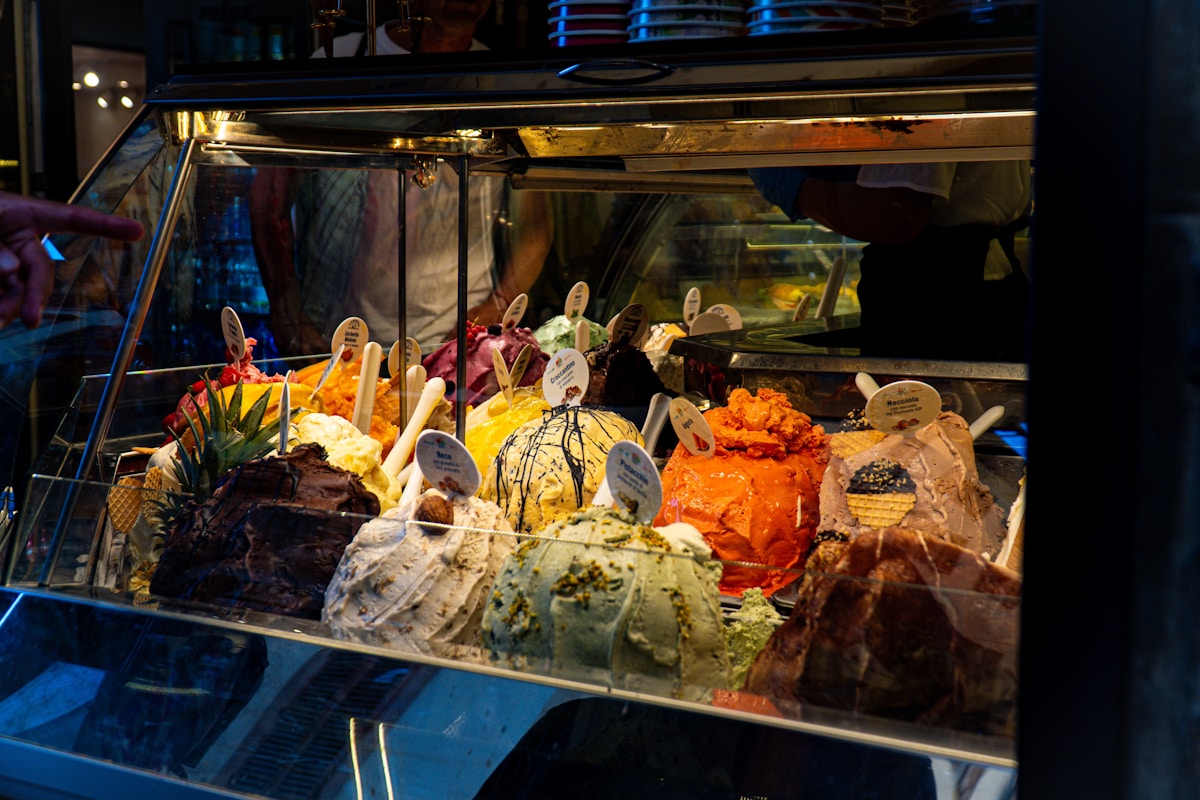
Gelato
Vivoli (Via Isole delle Stinche 7r, Santa Croce) - Florence’s most famous gelateria, open since 1932. Traditional flavours done exceptionally well. Small cup approximately €3.50. No cones. Open Tuesday–Sunday.
La Sorbettiera (Piazza Torquato Tasso, Oltrarno) - Small-batch gelato with seasonal ingredients. The pistachio, dark chocolate, and seasonal fruit flavours are excellent. Small cup approximately €3. Open daily.
Gelateria della Passera (Via Toscanella 15r, Oltrarno) - A tiny gelateria in a quiet Oltrarno square. Creative flavours and excellent quality. Small cup approximately €3. Open daily from March through October; reduced winter hours.
Wine
Tuscany produces some of Italy’s finest reds. Chianti Classico (the DOCG zone between Florence and Siena) is the house red at most trattorias - a glass costs approximately €5–8. Brunello di Montalcino is the region’s most prestigious wine - glasses from approximately €10–15 at enotecas. Vernaccia di San Gimignano is the best local white. For wine by the glass, try Le Volpi e l’Uva (Piazza dei Rossi, Oltrarno - glasses from approximately €5, excellent selection of small producers) or Enoteca Pitti Gola e Cantina (Piazza Pitti 16 - glasses from approximately €6).
Take a Guided Food Tour of Florence
Florence has some of the best food tour infrastructure in Italy — the Mercato Centrale, San Lorenzo market, Oltrarno neighbourhood, and the Chianti countryside within an hour are all well-covered by specialist operators. The most useful tours focus on the city’s specific identity: lampredotto (tripe) from the sandwichmen at the Nerbone counter, schiacciata from the forno on Via dei Servi, bistecca from the Buca Mario cellar. A morning food walk through the Oltrarno or the Central Market is the highest-value way to start eating well in Florence. Browse Florence food tours on GetYourGuide.
Practical eating tips
- The coperto (bread and cover charge) is approximately €2–3 per person at most trattorias
- Lunch is typically 12:30pm–2:30pm, dinner 7:30pm–10pm. Many trattorias close between meals
- A full trattoria meal (antipasto, primo, secondo, contorno, wine) costs approximately €35–50 per person
- Tipping is not expected but rounding up or leaving €1–2 is appreciated
- Avoid restaurants on the Piazza della Signoria and along the main pedestrian streets - prices are inflated and quality drops. Walk 2 minutes in any direction for better food. For structured introductions to the lampredotto circuit, the Mercato Centrale, and bistecca sourcing, Florence food tours cover the ground efficiently
Back to the full Florence travel guide for art, museums, and logistics. For wine to go with the bistecca and ribollita, our Italian wine guide covers Chianti Classico, Brunello, and the Lazio DOCG zones. Plant-based travellers: our vegan guide to Florence covers dedicated vegan restaurants and the naturally meat-free Tuscan dishes worth ordering. For gelato context beyond Florence’s own gelaterias, our Italian gelato guide explains how to spot genuine artisan gelato versus tourist-grade product. Planning meals across your whole Tuscany trip? Our Tuscan food guide covers the full regional cuisine - pici, wild boar, pecorino, and the best local markets.
Where to stay in Florence: Find hotels in Florence — search accommodation across all budgets.