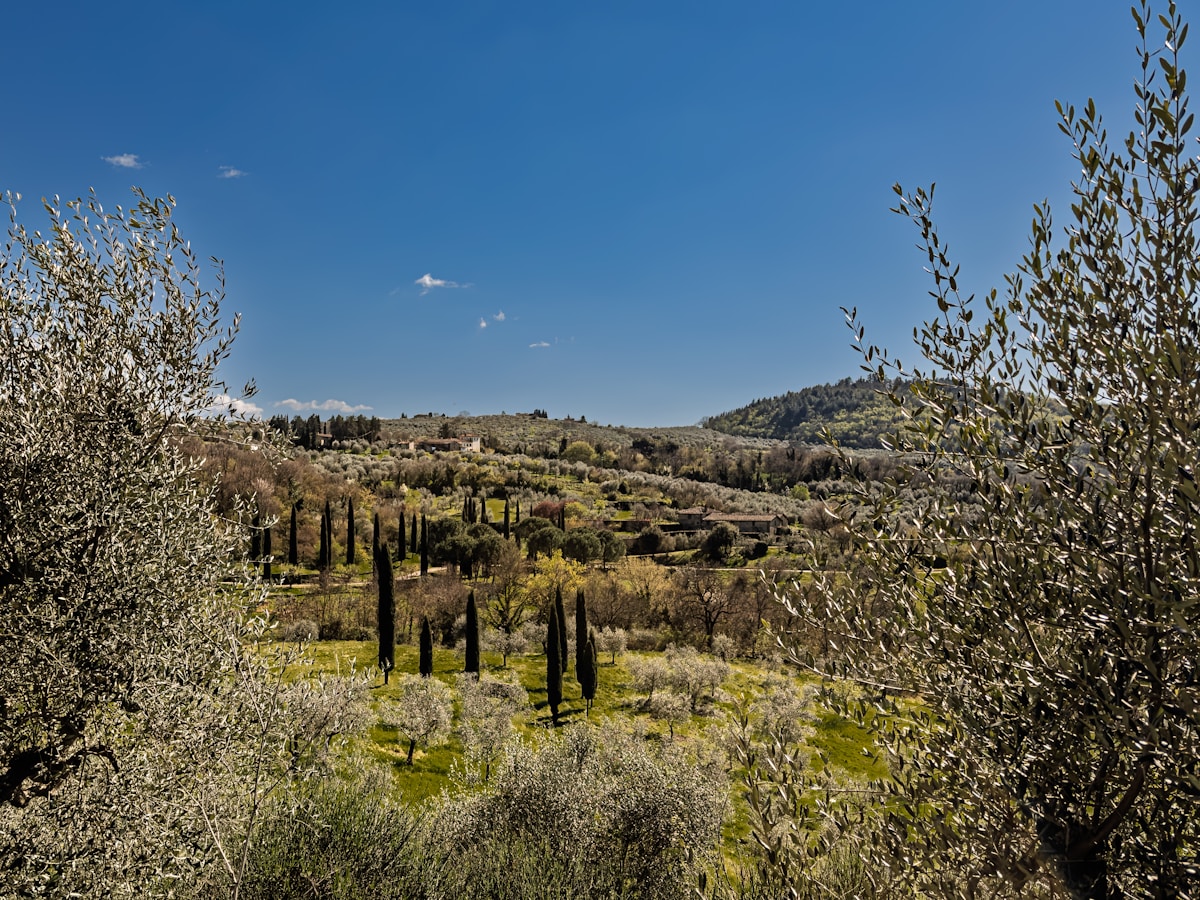
Florence sits at the centre of Tuscany with fast train connections north to Bologna and Venice, and a local bus and train network that reaches Siena, Pisa, Lucca, and the Chianti hill towns with ease.
Top Day Trip Tours at a Glance
| Tour | Duration | Price (from) | Group Size | Highlights |
|---|---|---|---|---|
| Siena, San Gimignano & Chianti Wine Tour | Full day | from €59 | Small group | Medieval towers, wine tasting, Piazza del Campo |
| Pisa and Lucca Day Trip from Florence | Full day | from €49 | Up to 20 | Leaning Tower, city walls, skip-the-line entry |
| Chianti Wine Country Tour with Lunch | Full day | from €79 | Small group | 2–3 estates, Tuscan lunch, vineyard walks |
| Cinque Terre Day Trip from Florence | Full day | from €65 | Up to 20 | Train logistics, 2 villages, Blue Trail hiking |
| Bologna Food Tour from Florence | Full day | from €55 | Small group | 35-min high-speed train, food market, tagliatelle al ragù |
Browse all Florence day trips → GetYourGuide
Siena (1 hour 15 minutes by bus)
The best medieval city in Tuscany. The Piazza del Campo is one of the finest public squares in Europe - a sloped, shell-shaped piazza where the Palio horse race runs twice yearly (2 July and 16 August). The Duomo interior contains a marble floor with 56 inlaid panels depicting biblical and classical scenes (fully uncovered only August–October, entry approximately €15 to see the full floor as of 2026, approximately €8 otherwise). The Pinacoteca Nazionale (Via San Pietro 29) holds Gothic Sienese paintings by Duccio, Simone Martini, and the Lorenzetti brothers - entry approximately €8 as of 2026.
Getting there: SITA/Autolinee Toscane bus from Florence’s Autostazione (below Santa Maria Novella station) - express service takes approximately 1 hour 15 minutes, approximately €8 each way as of 2026. Buses run every 30–60 minutes. The train is slower (1.5–2 hours, requires a change at Empoli) and arrives at a station 2km below the city centre. Bus is the better option.
Pisa (1 hour by train)
The Piazza dei Miracoli - Leaning Tower, Cathedral, Baptistery - is genuinely worth seeing once, crowds notwithstanding. The Tower leans at 3.97 degrees after stabilisation works in 2001. Climbing the Tower costs approximately €20 as of 2026 - book online at opapisa.it weeks ahead, especially May–September, as time slots sell out. The Baptistery (entry approximately €7) has extraordinary acoustics demonstrated every 30 minutes by a custodian. Beyond the Piazza, the medieval city of Pisa along the Arno has a university atmosphere and good restaurants at non-tourist prices - try Osteria dei Cavalieri (Via San Frediano 16, pasta approximately €10–12) or La Clessidra (Via Santa Cecilia 34, full meal approximately €25–30).
Getting there: Direct train from Santa Maria Novella to Pisa Centrale - approximately €9 each way as of 2026, trains every 30 minutes. From the station, walk 20 minutes north to the Piazza dei Miracoli, or take bus LAM Rossa (approximately €1.50).
Lucca (1 hour 30 minutes by train)
The best day trip in Tuscany for those who want to escape crowds. The intact Renaissance walls (4km circuit, 12 metres wide at the top) encircle a medieval city of towers, churches, and market squares. Rent a bike to cycle the walls (approximately 30 minutes for a full loop - rental from approximately €3/hour at shops near Piazza Napoleone). The Piazza dell’Anfiteatro is built on the outline of a Roman amphitheatre. The Torre Guinigi has a garden of holm oak trees growing on its roof - climb the 230 steps for views over the city (entry approximately €5 as of 2026).
Getting there: Train from Florence SMN - change at Pisa Centrale (total approximately 1.5 hours, approximately €9 each way). Direct buses also run from Florence’s Autostazione (approximately 1 hour 20 minutes, approximately €8).
San Gimignano (1 hour 45 minutes by bus)
The medieval tower city. 14 of the original 72 towers still stand, creating a skyline that’s visible from kilometres away. The Torre Grossa (the tallest remaining tower, 54 metres) is climbable - entry approximately €9 combined with the Palazzo Comunale museum as of 2026. The Collegiata (cathedral) has frescoes by Ghirlandaio - entry approximately €6. The local white wine, Vernaccia di San Gimignano, is excellent - tastings available at the Rocca (fortress) terrace and in enotecas along Via San Giovanni.
Getting there: SITA/Autolinee Toscane bus from Florence Autostazione to Poggibonsi (approximately 50 minutes, approximately €7), then local bus 130 to San Gimignano (approximately 25 minutes, approximately €2.50). Alternatively, join an organised tour from Florence (from approximately €45 per person including wine tasting).
Chianti wine country (1–2 hours, car recommended)
The wine region between Florence and Siena. The SS222 (Chiantigiana road) connects Greve in Chianti, Panzano, Radda, and Gaiole - the core of Chianti Classico DOCG territory. A car is effectively required for independent exploration - hire a car in Florence and pick up at Santa Maria Novella station.
Wine estates for tastings: Antinori nel Chianti Classico (Bargino, approximately 30 minutes from Florence - tours and tastings from approximately €25 per person, book online), Castello di Ama (near Gaiole - tastings from approximately €30, contemporary art collection on the estate), and Fontodi (Panzano - tastings by appointment from approximately €20). Book all tastings in advance.
If you don’t have a car, organised wine tours from Florence run daily (from approximately €55 per person including 2–3 estate visits, lunch, and transport). Chianti Bus services from Florence to Greve run on weekdays but are infrequent - a car or tour is more practical.
Bologna (35 minutes by Frecciarossa)
Italy’s food capital and an excellent contrast to Tuscany. Walk under the UNESCO-listed porticoes (38km of covered arcades), climb the Asinelli Tower for city views (498 steps, entry approximately €5 as of 2026), and eat the Emilian classics: tortellini in brodo (approximately €12–14), tagliatelle al ragù (approximately €11–13), and mortadella. Try Trattoria di Via Serra (Via Luigi Serra 9b - full meal approximately €25–30) or Drogheria della Rosa (Via Cartoleria 10 - pasta approximately €12–15, reservations essential).
Getting there: Frecciarossa from Florence SMN to Bologna Centrale - approximately 35 minutes, from approximately €15 booked in advance on trenitalia.com. Trains run every 30 minutes. Regional trains take approximately 1 hour and cost approximately €10.
Cinque Terre (2.5–3 hours by train)
The five coastal villages - Monterosso, Vernazza, Corniglia, Manarola, Riomaggiore - are feasible as a very long day trip but better as an overnight. The Sentiero Azzurro hiking trail connects all five villages (approximately 12km total, 5–6 hours walking). The most scenic section is Monterosso to Vernazza (approximately 2 hours).
Getting there: Train from Florence to La Spezia (approximately 2.5 hours, approximately €15 by regional train or €25 by Intercity), then the Cinque Terre Express local train between villages (approximately €5 per journey). The Cinque Terre Card (approximately €16/day as of 2026) covers unlimited train travel between villages plus the hiking trails. Go in spring (April–May) or autumn (September–October); summer is extremely crowded.
Volterra (2 hours by bus)
An Etruscan and medieval hilltop city with fewer visitors than San Gimignano. The Museo Etrusco Guarnacci (Via Don Minzoni 15) has one of Italy’s best Etruscan collections - entry approximately €10 as of 2026. The Roman theatre (1st century BC, partially excavated) is visible from the road above - entry approximately €5. The alabaster workshops along Via Porta all’Arco continue a craft tradition dating back to the Etruscans. City walls predate the Romans.
Getting there: CPT bus from Florence via Colle di Val d’Elsa (approximately 2 hours, approximately €7 each way). Alternatively, drive (approximately 1.5 hours via the superstrada).
Practical notes
- Florence to Siena: the bus is faster and more direct than the train. Buy tickets at the bus station ticket office or online at autolineetoscane.it
- Cinque Terre Card covers the hiking trails and village trains - buy online or at La Spezia station
- Chianti wine estates between Greve and Panzano generally require advance booking for tastings - walk-ins are rarely possible at the better estates
- For Pisa: the Leaning Tower sells out weeks ahead in summer - book via opapisa.it as early as possible
- Carry cash: some smaller towns and buses don’t accept cards reliably
Book Florence Day Trip Tours on GetYourGuide
| Day Trip | Duration | From price | Highlights |
|---|---|---|---|
| Siena and San Gimignano guided day trip | Full day | From €65 | Siena Piazza del Campo, Duomo, San Gimignano towers |
| Cinque Terre day trip from Florence | Full day | From €79 | Five villages, coastal walks, sea views, fresh seafood |
| Chianti wine country tour with tastings | Full day | From €85 | Greve, vineyard visits, Chianti Classico wine tasting |
Browse all Florence day tours on GetYourGuide →
Back to the full Florence travel guide for museums, eating, and getting around. For Siena as a destination in its own right - rather than just a day trip - we have a full city guide covering where to stay and eat. Cinque Terre is also worth a dedicated page if you’re considering an overnight. For Tuscany as a whole, our Tuscany itinerary maps a logical route connecting Florence, Siena, Lucca, Pisa, and the hill towns. The Amalfi Coast vs Cinque Terre comparison helps if you’re deciding which coastal area to prioritise on a longer Italy trip.
Where to stay in Florence: Find hotels in Florence — search accommodation across all budgets.