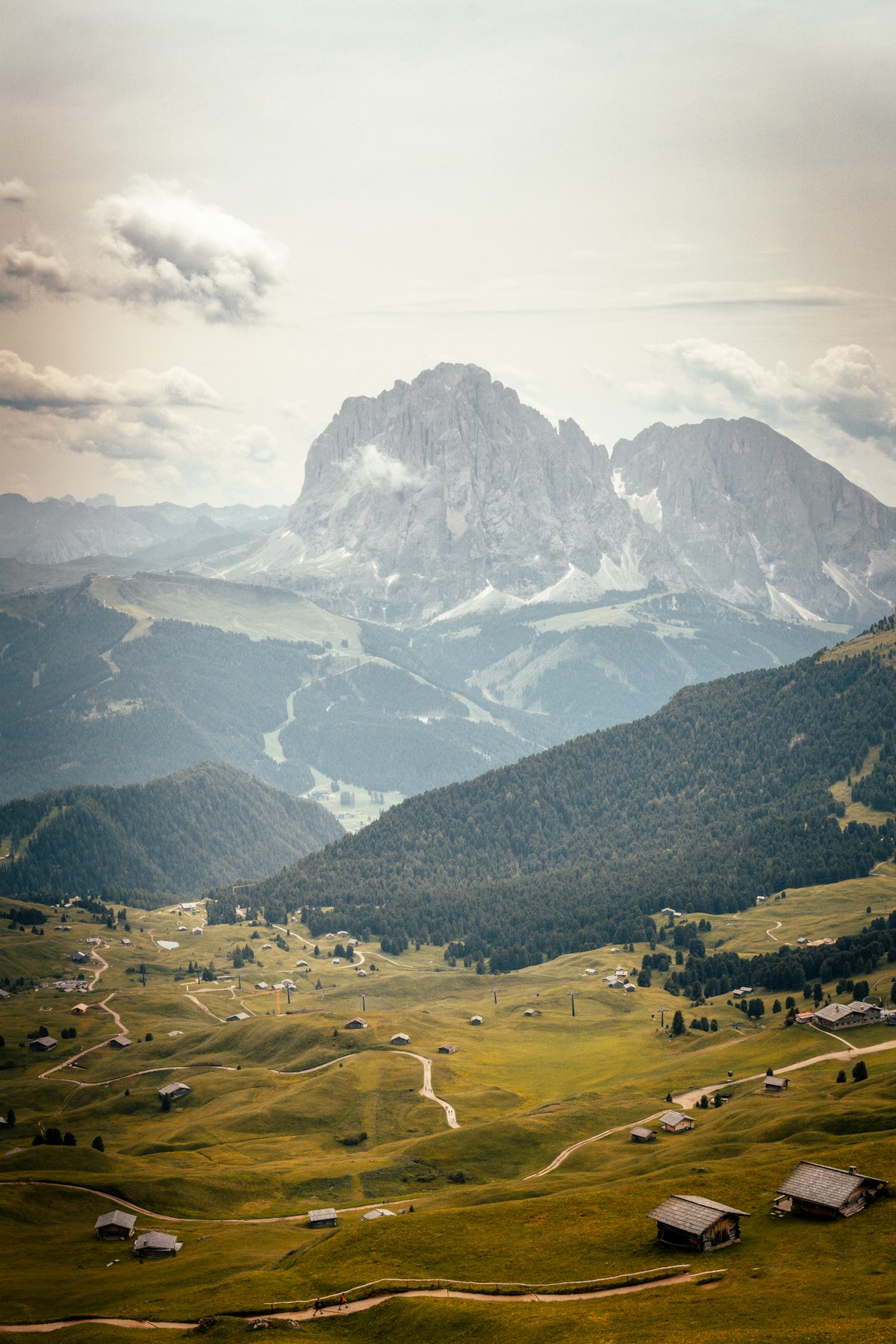
Bolzano is unlike any other Italian city. It sits at the junction of three valleys in South Tyrol, enclosed by mountains on three sides, and it operates in two languages — Italian and German — with equal official status. The food is Alpine, the architecture is Central European, and the single most extraordinary object in any Italian museum is here: Ötzi the Iceman, a 5,300-year-old natural mummy discovered in a glacier in 1991.
If you are travelling through northern Italy, Bolzano deserves at least a full day. Its centre is compact and walkable, the surrounding landscape is accessible without a car, and the quality of the specific experiences — particularly the Archaeology Museum and Castel Roncolo — is genuinely exceptional.
The South Tyrol Museum of Archaeology (Ötzi the Iceman)
Via Museo 43. This is the reason many people come to Bolzano, and it earns the attention. Ötzi the Iceman is the world’s oldest naturally preserved human mummy — a man who died around 3,300 BCE on the Ötztal Alps glacier, on the border of what is now Austria and Italy, and was found by two German hikers in September 1991 when the glacier retreated enough to reveal him.
The museum displays Ötzi himself in a purpose-built refrigerated chamber maintained at -6°C. Visitors view him through a small porthole window — you can see the preserved face, the dark skin, and the remains of his clothing clearly. It is a genuinely striking moment.
What sets this museum apart from a typical historical exhibit is the quality of the analytical work on display. Decades of scientific research have produced an extraordinary level of detail about Ötzi’s life: his last meal (ibex meat, red deer, einkorn wheat, and various plants eaten 30–60 minutes before death), his health (arterial calcification, gallstones, a broken right hand healed before death), and the cause of his death (an arrowhead lodged in his left shoulder, penetrating a major artery — he was shot from behind). All of this is presented clearly alongside reconstructions of his equipment.
The equipment is itself remarkable: a copper-bladed axe with a yew handle, a longbow of viburnum wood, a leather quiver with 14 arrows, a fire-starting kit with flint, pyrite, and fungus tinder, a birch-bark container, and layered clothing constructed from at least five different animal species. The craftsmanship and material knowledge embedded in these objects is striking.
Entry approximately €13. Open Tuesday to Sunday 10:00–18:00. Allow 2–3 hours. The museum shop sells serious academic publications on Ötzi research if you want to go further.
Piazza Walther and the Duomo
The central square is named after Walther von der Vogelweide, a 12th to 13th-century German-language poet — a naming that signals the cultural priorities of a predominantly German-speaking population. The Duomo di Bolzano (Cathedral of the Assumption) on the eastern side of the piazza has one of the most elegant Gothic facades in northern Italy: alternating bands of yellow and pink marble, a freestanding bell tower of 1501, and a detailed carved stone pulpit of the early 15th century inside the nave. Entry is free; dress modestly.
The piazza hosts Bolzano’s Christmas market from late November to 6 January each year — one of the most atmospheric and best-run in Italy, with regional produce, craft items, and mulled wine (Glühwein) stalls arranged around the square.
Via dei Portici (Lauben)
Running north from Piazza Walther, this continuous arcaded street — known in German as die Lauben — has been the commercial centre of Bolzano since the medieval period. The arcade runs for several hundred metres and shelters pedestrians completely in all weather, which explains why it has remained the primary shopping street for centuries.
The character is distinctly Central European: the architectural rhythm, the proportions of the covered walkway, and the type of shops (delis selling speck and mountain cheese alongside boutiques and bookshops) are more reminiscent of Innsbruck or Vienna than Milan or Florence. This is not a criticism — it is what makes Bolzano interesting. Spend time here browsing, and stop at one of the delicatessens to buy locally produced speck or wine to take away.
Castel Roncolo (Schloss Runkelstein)
Three kilometres north of the centre, above the Talvera river, Castel Roncolo is a 13th-century castle with the most important surviving collection of secular medieval frescoes in the world. This claim is not an exaggeration: the interior walls of the main building are covered with courtly scenes painted around 1390–1410 — hunting parties, tournament scenes, bathing scenes, and a long cycle based on Arthurian legend themes (Tristan and Isolde, figures from the Matter of Britain).
The frescoes are in remarkable condition given their age and survived largely because the castle was privately owned rather than subject to institutional renovation. Entry is approximately €8. Open Tuesday to Sunday 10:00–18:00. You can walk from the centre in about 45 minutes following the river path, or take bus 12. The walking route is pleasant — flat, following the Talvera riverbank north through parkland.
The Renon Plateau (Ritten)
The cable car to the Renon plateau departs from a dedicated station a short walk from the main train station. The ascent takes 12 minutes and climbs from Bolzano’s valley floor at 260m to the plateau at approximately 1,200m. Cost is approximately €6–7 each way.
The plateau offers an immediate contrast to the valley — cool air, alpine meadows, and views back down over Bolzano. The main attraction is the earth pyramids (Erdpyramiden): tall, narrow columns of glacial moraine topped by balanced rocks, formed over centuries as softer material eroded away beneath the harder rock caps. The best examples are accessible on a 30-minute walk from the village of Soprabolzano/Oberbozen.
A narrow-gauge railway (the Rittner Bahn, one of the oldest mountain railways in the Alps, dating from 1907) connects the plateau villages. A return cable car plus a short railway ride and the earth pyramid walk makes a comfortable half-day excursion without needing to rent a car.
Mercato di Piazza delle Erbe
The covered and open market on Piazza delle Erbe, one block from Via dei Portici, runs Monday to Saturday mornings until approximately 13:00. This is the most practical and enjoyable place to buy local South Tyrolean produce: speck in pre-sliced packages or whole, local mountain cheeses (Graukäse, aged Bergkäse, fresh Quark), South Tyrolean apples (some of the finest produced in Italy), freshly baked rye bread, and honey. Prices are competitive and the quality is consistently high. A useful stop before a picnic on the Renon or along the Talvera.
Getting Around Bolzano
The centre of Bolzano is compact enough to cover on foot in a single day. The Archaeology Museum, Via dei Portici, Piazza Walther, and the Herz-Jesu Church are all within 10 minutes’ walk of each other. Castel Roncolo requires either a 45-minute walk or a bus ride. The Renon cable car is a 10-minute walk from the train station.
City buses are efficient and inexpensive — a single ticket costs approximately €1.50. Taxis are available at the main station. Cycling is also practical: Bolzano has a well-developed bike lane network through the valley floor, and rental shops near the station charge approximately €15–25 per day.
Where to stay in Bolzano: Find hotels in Bolzano — search accommodation across all budgets.