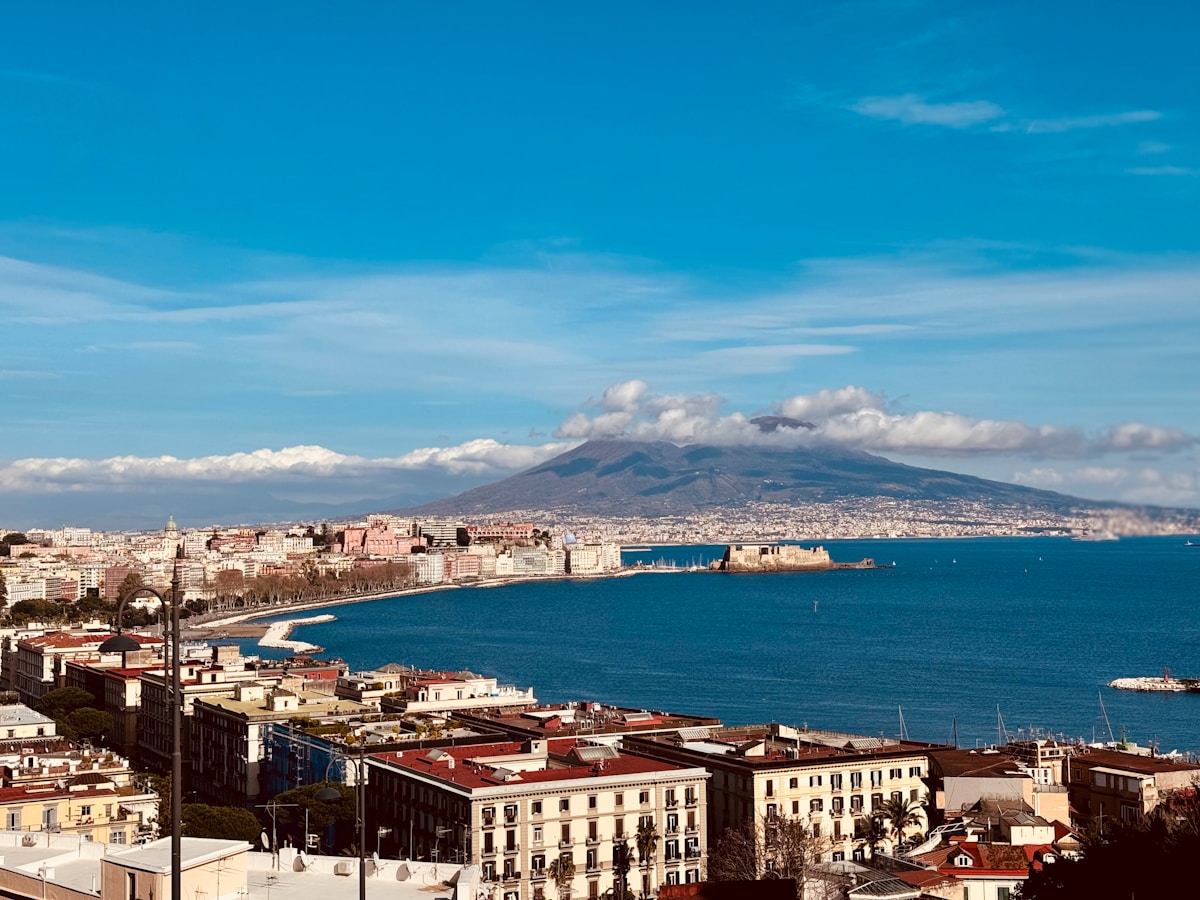
Naples has the richest concentration of day-trip destinations in Italy. Pompeii and Herculaneum are 30–40 minutes away. Capri is a ferry ride. The Amalfi Coast is reachable by ferry or bus. Most of the reasons people fly to southern Italy are directly accessible from Naples.
Top Day Trip Tours at a Glance
| Tour | Duration | Price (from) | Group Size | Highlights |
|---|---|---|---|---|
| Pompeii and Herculaneum Day Trip from Naples | Full day | from €49 | Small group | Skip-the-line, licensed guide, Circumvesuviana train |
| Capri Island Boat Tour from Naples | Full day | from €79 | Up to 20 | Blue Grotto, Faraglioni rocks, Villa Jovis |
| Amalfi Coast Day Trip from Naples | Full day | from €55 | Small group | Positano, Ravello, Amalfi town, scenic coastal drive |
| Mount Vesuvius and Pompeii Combo Tour | Full day | from €59 | Up to 20 | Crater hike, excavation site, skip-the-line |
| Caserta Royal Palace Day Trip from Naples | Half day | from €39 | Small group | Bourbon palace, waterfall gardens, 40-min train |
Browse all Naples day trips → GetYourGuide
Pompeii (35 minutes by Circumvesuviana train)
The best-preserved Roman city in the world, buried by Vesuvius in 79 AD. The site covers approximately 170 acres, of which about two-thirds have been excavated. Key sights include the Forum, the House of the Faun (with a copy of the Alexander Mosaic - the original is in Naples’ MANN museum), the Villa of the Mysteries (extraordinary frescoes depicting a religious ritual), the amphitheatre (the oldest surviving Roman amphitheatre), bakeries with intact stone ovens, and plaster casts of victims in their final moments.
Getting there: Circumvesuviana train from Napoli Piazza Garibaldi to Pompei Scavi – Villa dei Misteri (approximately 35 minutes, approximately €3.60 each way as of 2026). Trains run every 15–30 minutes. Entry approximately €18 (full) or €2 (EU citizens 18–25), as of 2026. Audio guide approximately €8. Book tickets online at ticketone.it - timed entry slots apply, especially from May through September.
Tips: Allow 4–5 hours minimum; the full site takes a full day. Arrive at opening (8:30am) for the least crowded experience. Bring water and sun protection - there is minimal shade. The on-site cafeteria is expensive; bring snacks. The Circumvesuviana trains are crowded in summer - keep bags secure.
Herculaneum (20 minutes by Circumvesuviana)
Better preserved than Pompeii, and far less crowded. Herculaneum was buried under approximately 20 metres of pyroclastic material (vs volcanic ash at Pompeii), which preserved organic materials that were destroyed at Pompeii - wooden beams, furniture, food, and even a library of carbonised papyrus scrolls now being read using AI and X-ray technology. The two-storey houses with intact upper floors, the Collegium of the Augustales (with original painted walls), and the boat storage chambers where approximately 300 skeletons were found are the standout features.
Getting there: Circumvesuviana from Napoli Piazza Garibaldi to Ercolano Scavi (approximately 20 minutes, approximately €2.80 each way). Entry approximately €13 as of 2026. Open 8:30am–7:30pm (summer) or 8:30am–5pm (winter). Book at ticketone.it. Allow 2–3 hours. Combined easily with a visit to Mount Vesuvius in the same half-day.
Capri (50–70 minutes by hydrofoil or ferry)
The most famous island in Italy. The Blue Grotto (Grotta Azzurra) - a sea cave where sunlight enters through an underwater opening, turning the water an electric blue - is the signature attraction. Boat entry approximately €18 (including rowboat and grotto access) as of 2026. Best in morning light before 10am; can close for rough seas - check conditions at the ticket office or call ahead. Villa Jovis - Emperor Tiberius’s clifftop palace at the eastern tip of the island, with views across the Bay of Naples. Entry approximately €4. The Faraglioni - three sea stacks off the island’s southern coast - are best seen from the Gardens of Augustus (entry approximately €1) or by boat tour (from approximately €18 per person).
Getting there: Hydrofoil from Molo Beverello port (approximately 50 minutes, approximately €22 each way as of 2026) or slower ferry from Calata Porta di Massa (approximately 70 minutes, approximately €15 each way). Multiple operators: SNAV, NLG, and Caremar. Book ahead in July–August. The Piazzetta in Capri town is the social centre. Anacapri (the upper town) is reached by bus from Capri (approximately €2.20).
Mount Vesuvius (1 hour by Circumvesuviana + bus)
The volcano that buried Pompeii. The crater rim (1,281 metres) offers views across the Bay of Naples, Capri, and the Sorrentine Peninsula. From the car park, a 30-minute moderate uphill walk on a volcanic gravel path reaches the crater.
Getting there: Circumvesuviana to Ercolano Scavi, then Vesuvio Express bus from the station to the crater car park (approximately 20 minutes, approximately €10 return as of 2026). Crater entry approximately €10. Total time approximately 3–4 hours including transport. An easy half-day combined with Herculaneum below.
Amalfi Coast (ferries 1–2 hours / bus 2+ hours)
Positano - The photogenic village cascading down the cliff. Expensive restaurants and boutiques on the steep staircase streets. The beach (Spiaggia Grande) is the main draw. Ferry from Molo Beverello approximately 50 minutes (approximately €20 each way as of 2026, seasonal April–October).
Amalfi - The town that gives the coast its name. The 9th-century cathedral (Duomo di Sant’Andrea - entry approximately €3 to the cloister) dominates the main piazza. The Paper Museum (approximately €5) documents Amalfi’s historic paper-making industry. Ferry from Molo Beverello approximately 80 minutes (approximately €16 each way).
Ravello - A hillside town 350 metres above Amalfi. Villa Cimbrone (entry approximately €8 as of 2026) has the Terrace of Infinity - a garden belvedere with views along the entire coast. Villa Rufolo (entry approximately €8) hosts the Ravello Festival (classical music, June–September - tickets from approximately €25). Bus from Amalfi to Ravello approximately 25 minutes (approximately €1.30).
By bus: SITA buses from Naples run year-round via Sorrento, but the coastal road is slow (2+ hours to Amalfi) with hairpin turns. Summer traffic makes this much longer. Ferries are faster and more enjoyable.
Caserta - Reggia di Caserta (40 minutes by train)
The Bourbon royal palace, completed in 1780. Often called Italy’s Versailles, though with 1,200 rooms it is actually larger than Versailles. The 3-kilometre royal park stretches from the palace to a waterfall, lined with fountains and cascades. The English Garden within the park is modelled on Kew Gardens. Entry to the palace and park approximately €14 as of 2026. Open Wednesday–Monday 8:30am–7:30pm, closed Tuesday. Allow 3–4 hours.
Getting there: Direct train from Napoli Centrale to Caserta (approximately 40 minutes, approximately €4 each way by Regionale, as of 2026). Frecciarossa and Intercity don’t stop at Caserta. The palace is a 5-minute walk from the station.
Paestum (1 hour 30 minutes by train)
Three Greek temples south of Salerno, better preserved than anything in mainland Greece. The Temple of Hera I (circa 550 BC), the Temple of Hera II/Neptune (circa 450 BC - one of the best-preserved Doric temples in the world), and the smaller Temple of Athena (circa 500 BC). The archaeological museum holds the Tomb of the Diver - a 5th-century BC painted tomb lid that is one of the most important Greek paintings in existence, depicting a young man diving into a body of water (interpreted as a metaphor for the transition from life to death).
Getting there: Train from Napoli Centrale to Salerno (approximately 35 minutes, approximately €5 by Regionale), then regional train from Salerno to Paestum (approximately 30 minutes, approximately €3). Entry approximately €12 (site and museum combined) as of 2026. Open daily 8:30am–7:30pm (summer), 8:30am–sunset (winter). Allow 2–3 hours.
Procida (1 hour by ferry)
The smallest of the Bay of Naples islands - brightly coloured fishing village (Marina Corricella, painted in pastels), quiet beaches (Spiaggia della Chiaiolella), and none of the Capri crowds. European Capital of Culture 2022, which brought improved infrastructure without over-tourism. Ferry from Molo Beverello (approximately €13 each way, approximately 1 hour) or from Pozzuoli (approximately €7, approximately 40 minutes), as of 2026. A gentle day trip - allow 4–5 hours for walking, swimming, and lunch. Seafood restaurants at Marina Corricella serve fresh fish with bay views (pasta approximately €12–16).
Practical notes
- Circumvesuviana trains run frequently but are overcrowded in peak summer - keep bags and valuables secure. Buy tickets at the station machines (not on board - inspectors fine ticketless passengers approximately €40)
- Pompeii tickets: book at ticketone.it at least 1–2 weeks ahead in summer; timed entry slots control visitor numbers. Guided tours from Naples to Pompeii include skip-the-line entry and a guide on-site - useful for first-time visitors who want context
- Capri Blue Grotto: can close for rough seas - check conditions before going. Best in morning light (before 10am)
- Ferries to Capri, Amalfi, and Positano: book ahead in July–August through SNAV, NLG, or Caremar websites. Weather cancellations occur - have a backup plan
- Naples to Caserta by train: use the Regionale - the high-speed trains don’t stop at Caserta
- Combined half-day: Herculaneum + Vesuvius is the most efficient combination - both accessible from Ercolano Scavi Circumvesuviana station
Book Naples Day Trip Tours on GetYourGuide
| Day Trip | Duration | From price | Highlights |
|---|---|---|---|
| Pompeii and Herculaneum guided tour from Naples | Full day | From €55 | Expert guide, skip-the-line entry, both Roman sites |
| Capri island day trip from Naples | Full day | From €79 | Blue Grotto, Monte Solaro, Augustus Gardens, Faraglioni |
| Amalfi Coast day trip from Naples | Full day | From €65 | Positano, Amalfi, Ravello, scenic coastal drive |
Browse all Naples day tours on GetYourGuide →
Back to the full Naples travel guide for the city itself - the archaeological museum, Spaccanapoli, and where to eat. For Pompeii tours with a guide to maximise the site, our Pompeii tours guide covers skip-the-line options and what a guided visit adds. For Capri as a destination with more time: our Capri island guide covers the island in detail. The Amalfi Coast also has its own dedicated section - see the Amalfi Coast guide and, if planning to stay, the Amalfi Coast hotels guide. For a southern Italy road trip connecting Naples, Pompeii, and the Amalfi Coast, our southern Italy itinerary maps the full route.
Where to stay in Naples: Find hotels in Naples — search accommodation across all budgets.