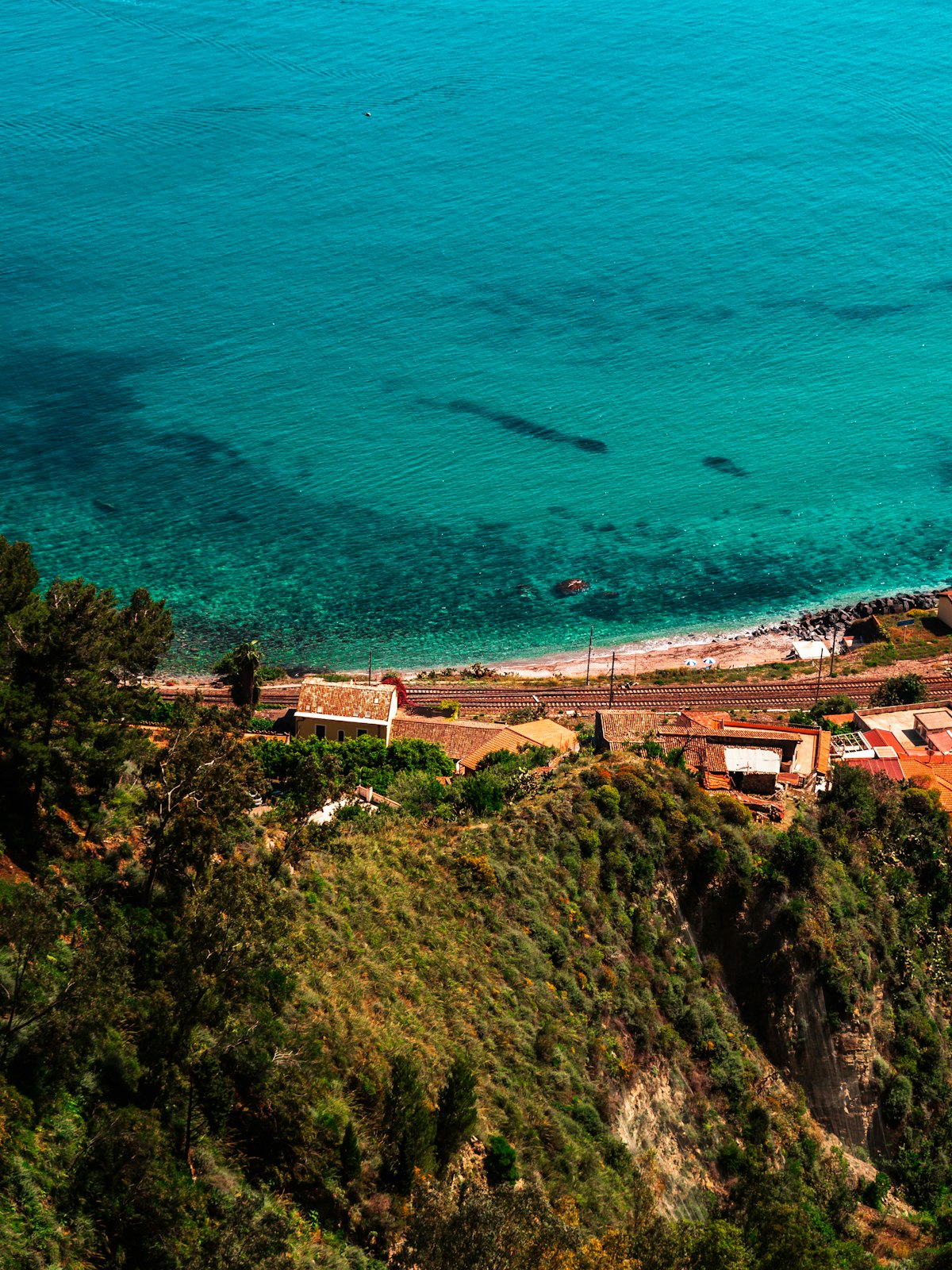
Taormina occupies a spectacular position on the cliffs of eastern Sicily - at 200 metres above the Ionian Sea, with Mount Etna rising behind it to the north-west. The combination of the ancient theatre, the medieval street, and the volcanic mountain framed behind the stage columns is genuinely one of the great visual experiences in Italy. The town knows this, and caters very deliberately to visitors. Getting the most from Taormina requires going early or late, knowing which streets to take beyond the main Corso Umberto, and understanding what the theatre actually is.
Teatro Antico di Taormina
The town’s defining sight - a theatre built into the hillside, with the stage oriented to frame Mount Etna behind the columns of the scena. Entry approximately €12 as of 2026. Open daily 9am–7pm (summer), 9am–4pm (winter). The site is at the northern end of the town, a 5-minute walk from Piazza del Duomo.
The theatre’s statistics are notable: a diameter of 109 metres and seating capacity estimated at 5,400–10,000 depending on reconstruction. What the numbers don’t capture is the view from the upper tiers - Etna occupying the space normally taken by the stage backdrop, with the coast of Calabria visible across the strait on clear days. The theatre is used for summer concerts and performances (the Taormina Arte festival runs June–August), which means it occasionally closes for event setup. Check the calendar before visiting in summer if you want it open.
Top Tours at a Glance
| Tour | Duration | Price (from) | Group Size | Highlights |
|---|---|---|---|---|
| Taormina walking tour with Greek Theatre | 2 hrs | from €25 | Up to 15 | Teatro Antico, Corso Umberto, Isola Bella view |
| Mount Etna guided hike from Taormina | 6 hrs | from €60 | Up to 10 | Cable car, summit craters, lava fields, guide |
| Taormina + Etna day tour | 8 hrs | from €75 | Up to 20 | Greek theatre, Etna cable car, wine tasting |
| Godfather Sicily tour from Taormina | 8 hrs | from €65 | Up to 15 | Savoca, Forza d’Agrò, Corleone film locations |
Browse all Taormina tours → GetYourGuide
Corso Umberto and Piazza IX Aprile
The main pedestrian street runs 900 metres through the old town from Porta Catania to Porta Messina - a medieval street with 19th-century boutiques, ceramic shops, and the occasional medieval church doorway. The architecture rewards attention beyond the shopfronts.
Piazza IX Aprile, roughly in the middle of the Corso, is the town’s main square - built on a terrace above the coast, with an open side facing the sea and Etna. This is where Taormina’s famous view is most widely photographed: the clock tower of San Giuseppe, the Baroque church of Sant’Agostino (now an auditorium), and the coastline below. The cafés on the piazza charge accordingly; the square itself is free.
Piazza del Duomo, at the southern end, is dominated by the Baroque fountain with its centaur (the city symbol - female torso, horse body) and the Cathedral of San Nicola, a 13th-century Norman church with a crenellated Gothic exterior. The cathedral interior is simple and dark after the sun outside; free entry.
Isola Bella
The small island 2km below the town at Mazzarò beach is connected to the mainland by a narrow gravel causeway - at low tide it’s walkable, in rough weather the causeway disappears. The island itself is a nature reserve and closed to visitors, but the beach and cove on either side of the causeway are among the prettiest on this stretch of the Sicilian coast.
To reach Mazzarò from Taormina, take the cable car from Via Luigi Pirandello (runs approximately every 15 minutes, approximately €3 each way as of 2026). The beach has sunbed and umbrella hire (approximately €15–25 per day for a set) and a handful of seafood restaurants. Best visited early morning before the summer crowds arrive or after 5pm when they thin.
Castelmola
A hilltop village 5km above Taormina (and 450m higher), reached by a 1-hour footpath from Porta Catania or by taxi. The village is small - one main street, a ruined castle above it, and a few bars. The reason to go is the view: from the castle ruins, you can see both the Ionian coast to the east and the Tyrrhenian coast to the north-west simultaneously, with Etna between them. Bar Turrisi in the village makes almond wine (vino di mandorla), a Sicilian tradition increasingly difficult to find elsewhere. The walk down to Taormina takes about 45 minutes.
Villa Comunale (Public Gardens)
A formal garden running along the cliff edge south of Piazza Apollonia - laid out in the late 19th century by an English aristocrat, Florence Trevelyan, who retired to Taormina. The garden has exotic plants, a small Art Nouveau tower, and constant views over the coast. Free, open daily 8:30am–dusk. Quieter than Piazza IX Aprile and genuinely pleasant in the morning when the light is soft.
Sunset and Evening
The views from Taormina are better in the late afternoon than at midday - Etna’s profile sharpens as the haze burns off, the sea turns darker, and the tourist rush slows. The Belvederino Pirandello (a small terrace on Via Pirandello, above the cable car station) is less crowded than Piazza IX Aprile and gives a comparable view south along the coast toward Catania.
The Corso Umberto is most atmospheric in the evening when the day-trippers have left and the town shifts to its own tempo. The restaurants in the side streets off the Corso - Via Circonvallazione, Vico Stretto - are notably better value than those directly on the main drag.
Day Trips from Taormina
Mount Etna is the obvious major excursion - the cable car from Nicolosi reaches 2,500m, with jeep tours to approximately 2,900m. A guided hike to the summit craters at 3,326m is possible with a guide between June and October, takes approximately 6–8 hours total, and requires appropriate footwear and clothing. Approximately €60–100 for guided excursions as of 2026. Buses from Taormina Giardini-Naxos station connect to Nicolosi.
Naxos and Giardini-Naxos: The ancient Greek colony of Naxos (the first Greek settlement in Sicily, founded 734 BC) sits below Taormina at the coast - the archaeological site is small but historically significant. The adjacent modern town of Giardini-Naxos is a beach resort with good-value seafood restaurants. Reachable by cable car or bus.
Catania: Sicily’s second city is 50 minutes by train from Taormina-Giardini station - a Baroque city with a famous fish market (La Pescheria), the elephant fountain of Piazza del Duomo, and a cathedral built on Greek and Roman foundations.
Guided tours: Book a guided tour of Taormina to make the most of your time - options range from half-day walking tours to full-day excursions combining multiple sites.