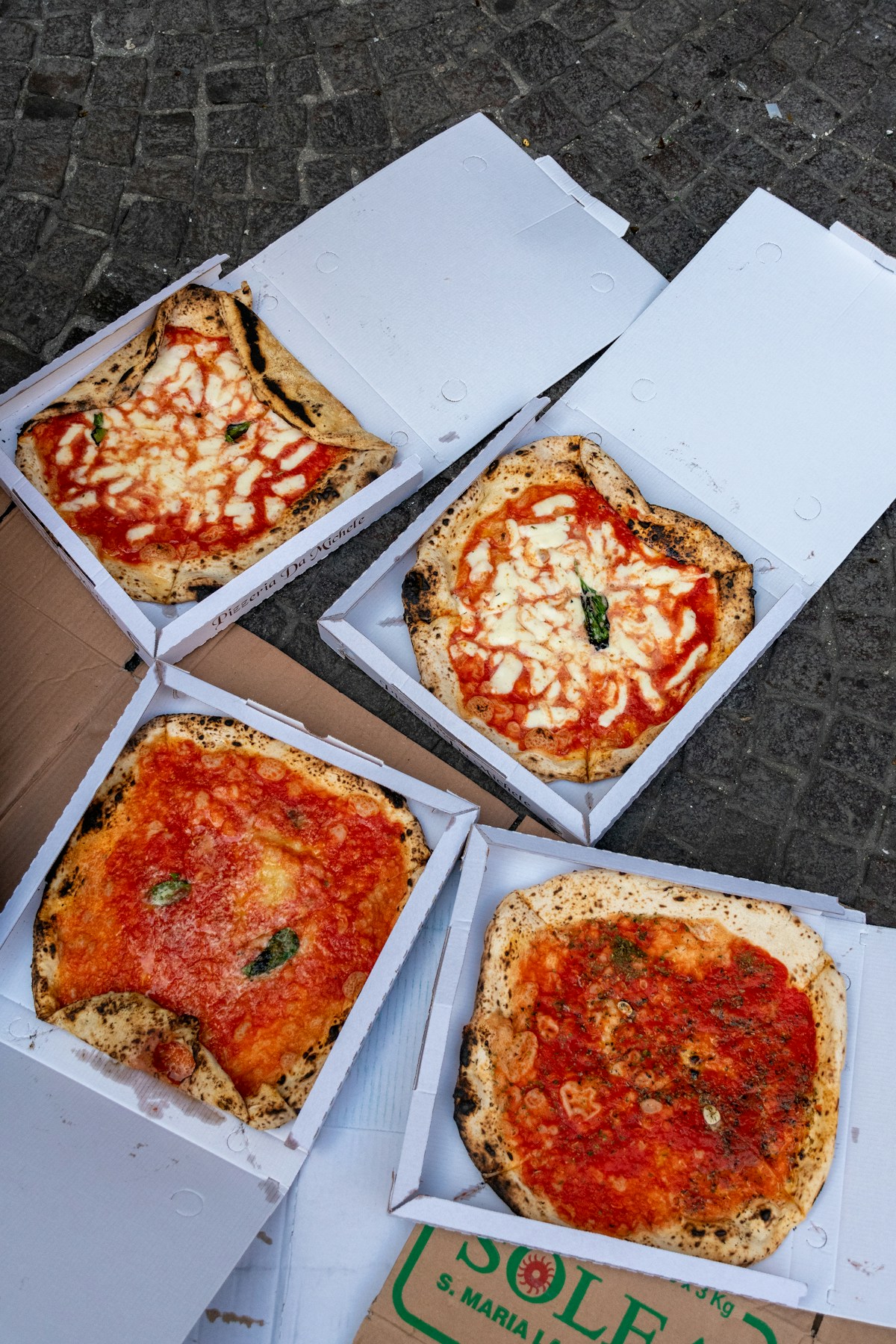
No city in Italy is more serious about its food than Naples. The Neapolitans invented pizza as the world now eats it, developed the ragù that takes six hours to make correctly, and produced a street food culture dense enough to sustain visitors for days without ever entering a sit-down restaurant. The intensity of opinion here about what constitutes the correct sfogliatella, the right crust on a pizza, or whether your ragù has cooked long enough is remarkable.
Here is what to eat, where to eat it, and what the rules actually are.
Pizza
Pizza Napoletana is protected by the EU as a Traditional Specialty Guaranteed (TSG). The dough must rest for at least eight hours, the tomatoes must be San Marzano DOP, and it must be cooked in a wood-fired oven. The two traditional variants are:
Margherita - tomato, Fior di Latte or Bufala mozzarella, basil, olive oil. The Bufala version (with mozzarella from water buffalo milk, typically from Caserta province) costs slightly more and has a more intense flavour.
Marinara - tomato, garlic, oregano, olive oil. No cheese. The oldest of the two and preferred by many Neapolitan purists.
L’Antica Pizzeria da Michele (Via Cesare Sersale 1) serves only these two options, as it has since 1870. Margherita approximately €5, Marinara approximately €4.50. There are queues; join them.
Sorbillo (Via dei Tribunali 32) offers a wider menu and better handles the volume of customers. Their friarielli (Neapolitan broccoli rabe) and salsiccia topping is worth trying, approximately €7–9.
Starita (Via Materdei 27) in the Materdei neighbourhood has been operating since 1901 and is worth the short detour from the historic centre, approximately €6–10.
Street Food: The Quartieri Spagnoli Circuit
Naples has the most active street food culture in Italy. The Quartieri Spagnoli (Spanish Quarter) and Via dei Tribunali are the primary circuits.
Pizza fritta (fried pizza) was the cheap wartime variant when fuel for ovens was scarce. The dough is folded around a filling of ricotta, salame, and cicoli (pressed pork scratchings), then deep-fried. Zia Esterina Sorbillo (Via Toledo 35) specialises in it, approximately €3–4.
Cuoppo di mare is a paper cone of mixed fried seafood - calamari, small fish, mussels - from street vendors in Porta Nolana and the Pignasecca market area. Approximately €5–8.
O’ per e o’ muss (pig’s foot and snout, marinated in lemon and vinegar) is the most challenging Neapolitan street food and the one most associated with the city’s cucina povera tradition. It appears at specialist stands in the Pignasecca market.
Tarallo napoletano - glazed ring-shaped crackers flavoured with lard, pepper, and almonds - are sold from glass jars at every bar in the city, approximately €0.50 each. Neapolitans eat them dunked in white wine (the classic pairing is described as “affogato” - drowned).
Pastries and Sweets
Sfogliatella riccia - the shell-shaped pastry with dozens of thin crispy layers - should be eaten warm, straight from the oven. Sfogliatelle Attanasio (Vico Ferrovia 1–4, near Napoli Centrale) opens at 6:30am and queues form immediately. Approximately €1.80 each.
Pastiera napoletana is the Easter tart: a pastry shell filled with ricotta, cooked wheat grain, orange blossom water, and candied citrus. Genuinely seasonal - Neapolitan tradition holds it is made only for Easter and the days immediately before it. The best versions appear in pasticcerie from Holy Week onwards.
Babà al rum - small yeast cakes soaked in rum syrup - were brought to Naples from France via the Bourbon royal court. Every pasticceria makes them; the drier ones (which need to absorb more syrup) are considered superior. Approximately €2–3 each.
Delizia al limone is a Neapolitan invention from the Sorrento coast: a dome-shaped sponge soaked in limoncello and filled with lemon cream. It has spread across Naples and is now on most pastry menus, approximately €3–5.
The Dishes That Take Time
Ragù napoletano is the long-cooked Sunday sauce: large cuts of beef (typically braciole - stuffed and rolled), sausage, and possibly pork ribs slow-braised in tomato for a minimum of six hours, sometimes overnight. The meat is removed and served as a secondo; the sauce dresses pasta (typically rigatoni, mafaldine, or ziti) as the primo. Trattoria da Nennella (Vico Lungo Teatro Nuovo 103–105, Quartieri Spagnoli) is a chaotic, family-run institution where the ragù appears regularly, approximately €10–14 for a pasta course.
Paccheri al pomodoro del piennolo uses the cherry tomatoes grown on the volcanic soil of Vesuvius (piennolo means hanging - the clusters are dried on hooks through winter). The flavour is intensely sweet and acidic simultaneously. Simple preparations let the tomato speak - pasta, olive oil, basil. Available at most serious osterie, approximately €12–16.
Fritto misto di pesce - the Neapolitan fish fry - uses the morning’s catch from the Gulf. Baccalà (salt cod) fritters are the most common standalone item, approximately €2–3 from street vendors; a full mixed fry plate at a sit-down restaurant runs approximately €18–24.
Best Markets
Mercato di Porta Nolana (around Via Marina, near Napoli Centrale) is the main fish market, operating Tuesday to Sunday morning. The pace is intense and the quality is high; it’s where most restaurants source their catch.
La Pignasecca (Via Pignasecca, near Via Toledo) is the most characterful general food market in the city centre - produce, cheese, meat, street food stands all compressed into a few streets. Open Monday to Saturday morning.
Seasonal Specialties
Friarielli (Neapolitan broccoli rabe) appear at their best in autumn and winter - the cold makes them more tender and slightly sweet. They are sautéed with garlic, chilli, and olive oil, and appear as a pizza topping (with sausage), as a side dish, and stuffed into sandwiches.
Zeppole di San Giuseppe - deep-fried or baked dough rings filled with pastry cream and topped with an amarena cherry - are eaten on 19 March (St Joseph’s Day, also Father’s Day in Italy). They appear in pasticcerie from late February.
Take a Guided Food Tour of Naples
Naples has the most concentrated street food culture in Italy — three distinct pizza styles, six different types of fried dough, sfogliatelle from specialist shops open since the 1800s, and a raw seafood tradition at the Porta Nolana market that is unlike anything elsewhere in the country. A guided street food tour through Spaccanapoli and the Quartieri Spagnoli, lasting two to three hours, covers the specific vendors and explains the history behind each bite. Browse Naples food tours on GetYourGuide.
What to Avoid
Pizza places on Via Partenope (the seafront boulevard) charge a tourist premium without the quality to justify it. The best pizzerias are in the historic centre (Via dei Tribunali, Via della Sanità, Quartieri Spagnoli).
Mozzarella di Bufala on a cold pizza. Bufala is best eaten fresh, at room temperature, with nothing more than olive oil and salt - or added to a pizza at the last possible moment. Restaurants that put it in the oven with the pizza are treating expensive cheese carelessly.
Limoncello served cold from the freezer in tourist restaurants. This is fine but worth noting - the best limoncello in the Naples area is homemade and served at room temperature after a meal.
For the full story of Neapolitan culinary history, the science of the pizza dough, and regional wine pairings, see our Neapolitan food guide.
For guided food tours covering street food, markets, and pizza-making, browse food tours in Naples.