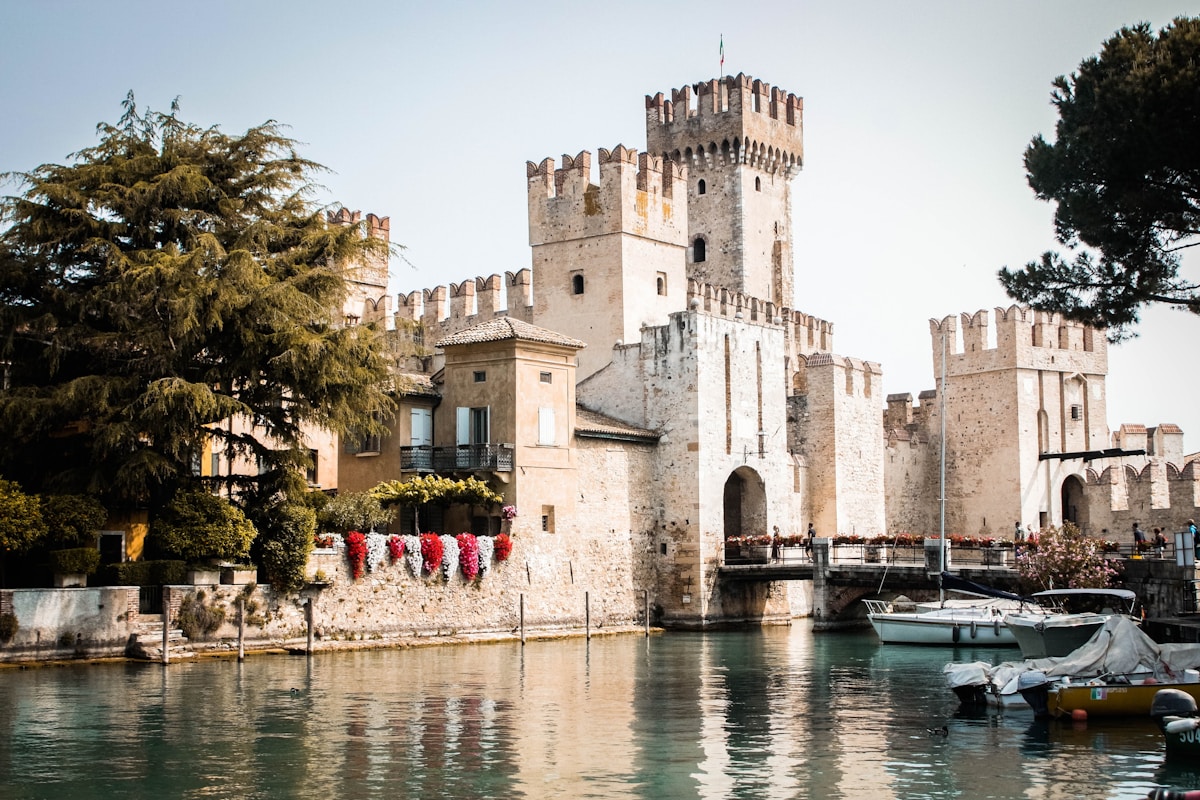
Sirmione sits on a narrow promontory jutting 4km into the southern end of Lake Garda. It is one of the most photographed places in northern Italy: a 13th-century castle surrounded by water on three sides, Roman ruins at the tip of the peninsula, and thermal springs that have been in use since antiquity. For all that, it is also one of the most crowded destinations on the lake in summer - the single road onto the peninsula closes to traffic when the town reaches capacity, which happens regularly on summer weekends.
Top Tours at a Glance
| Tour | Duration | Price (from) | Group Size | Highlights |
|---|---|---|---|---|
| Sirmione guided tour: castle, ruins, and spa | 3 hrs | from €45 | Up to 12 | Scaliger Castle, Grotte di Catullo, Aquaria thermal overview |
| Lake Garda boat day from Sirmione | 7 hrs | from €80 | Up to 15 | Limone sul Garda, Riva del Garda, swimming, lunch stop |
| Sirmione to Verona day trip combination | 9 hrs | from €70 | Up to 16 | Sirmione castle + ferry, Verona Arena, Romeo and Juliet house |
| Lake Garda e-bike tour: southern shore loop | 4 hrs | from €60 | Up to 12 | Desenzano to Sirmione coast road, village stops, lunch |
Browse all Lake Garda tours → GetYourGuide
Scaliger Castle (Rocca Scaligera)
The Scaliger Castle (Rocca Scaligera) dominates the entrance to the old town. Built by the della Scala family of Verona in the 13th century, it guards the narrow bridge that is the only land access to the peninsula. The castle is surrounded by water on three sides, with its towers reflected in the harbour below.
Inside, the castle holds a small collection of finds from the lake and the Roman villa, but the main reason to visit is the view from the towers. Climbing to the top gives a panorama across the southern lake towards the Brescia shore and the distant Dolomites. Entry costs approximately €6 as of 2026. The castle is open Tuesday to Sunday, closed Mondays. Queues form by mid-morning in summer - arrive at opening (8.30am) or later in the afternoon.
Grotte di Catullo
At the tip of the peninsula, the Grotte di Catullo is one of the largest Roman residential complexes in northern Italy. The site covers the full headland and contains the well-preserved ruins of a 1st-century BC villa - traditionally associated with the Latin poet Catullus, who was born near Verona and may have had a property here, though the attribution is not historically certain.
The ruins are extensive: stone-vaulted rooms, cisterns, heated floors, and long corridors open to the lake. At the far end of the promontory, the views across the lake towards Desenzano and the Brescia hills are exceptional. The museum at the entrance holds mosaic fragments, pottery, and Roman finds from the site.
Entry costs approximately €6 as of 2026, combined ticket with the museum approximately €8. Open Tuesday to Sunday, 8.30am to 7.30pm in summer (shorter hours in winter). The walk from the castle gate to the ruins takes about 15 minutes through the old town.
Aquaria Thermal Spa
Sirmione sits on natural thermal springs that have been exploited since Roman times. Aquaria (Viale Marconi 1) is the main public thermal facility, operated by the same thermal healthcare group that runs medical treatments in the town. The spa has both indoor and outdoor pools fed by sulphurous thermal water at approximately 37°C.
Day passes for the thermal pools start from approximately €25 as of 2026 for access to the outdoor terraced pools with lake views. Higher tiers include access to the indoor spa area, saunas, and steam rooms. Booking in advance is recommended in peak season - walk-up access can be refused when pools are at capacity. A towel and bathrobe rental service is available at the entrance if you arrive without.
The outdoor terrace pools overlooking the lake are the main draw. The combination of warm thermal water and cool lake air in late autumn or winter is genuinely distinctive.
Jamaica Beach
Jamaica Beach (Spiaggia Jamaica) lies on the eastern side of the peninsula, accessible through a gate in the town walls. It is a free, rocky-shore swimming area with clear water and a dramatic view of the castle from the water. The name comes from the vivid aquamarine colour of the shallows, which does have a faintly Caribbean quality.
The beach gets crowded on summer afternoons but is quieter in the morning. There are no sunbeds or facilities - bring your own towel and food. The water deepens quickly from the rocky shore, so it is better suited to confident swimmers than young children. For families with small kids, the sandy area near the thermal park entrance is more manageable.
Eating in Sirmione
Ristorante Al Pescatore (Via Piana 20) - specialises in lake fish: grilled tench (tinca), lavarello in butter and sage, and pike (luccio) carpaccio. Main courses approximately €18–26 as of 2026. Book ahead for dinner in July and August.
Osteria della Vecchia Posta (Piazza Flaminia 8) - a reliable trattoria in the historic centre with outdoor terrace seating. Pasta from approximately €12, secondi from €16. Good for lunch before visiting the ruins.
Gelato Gelateria Lugana (Via Vittorio Emanuele 31) - consistently rated one of the better gelaterias in the town. Fresh fruit sorbets and classic Italian flavours. Worth a stop after the castle or ruins.
Getting There and Around
Sirmione is 35 minutes by train from Verona (Peschiera del Garda station, then a 20-minute bus to Sirmione). Direct buses from Brescia run to the Sirmione terminal. By car, the A4 motorway has a Sirmione exit; parking is in the large car parks at the entrance to the peninsula (approximately €3/hour, €15 maximum/day as of 2026).
The car park at Piazza Virgilio is the closest to the castle gate and typically fills first. The second car park near the thermal park fills more slowly. Note that summer weekend traffic on the approach road can add 30–45 minutes to journey times from the motorway exit.
Inside the peninsula, everything is walkable - the historic centre is roughly 600 metres end-to-end, and the path to the Grotte di Catullo adds about 1km.
For getting around the rest of the lake, Sirmione has a ferry connection to Desenzano, Peschiera, and northern towns. See the Lake Garda ferry guide for routes and day pass prices. Planning to explore more than one town? Renting a car in Italy gives you flexibility on the western shore roads.