Sorrento’s position at the southern tip of the Sorrentine peninsula makes it the most practical base in the region. Pompeii is 30 minutes by train. Capri is 25 minutes by hydrofoil. The Amalfi Coast begins 40 minutes to the east by ferry. Herculaneum and Vesuvius are reachable the same morning. No other town in this part of Italy puts this many world-class destinations within a half-hour of each other.
Top Day Trip Tours at a Glance
| Tour | Duration | Price (from) | Group Size | Highlights |
|---|---|---|---|---|
| Pompeii Day Trip from Sorrento | Half day | from €45 | Small group | Circumvesuviana, skip-the-line entry, licensed guide |
| Capri Boat Tour from Sorrento | Full day | from €65 | Up to 20 | Blue Grotto, Faraglioni, Anacapri — 25-min hydrofoil |
| Amalfi Coast Day Trip from Sorrento | Full day | from €55 | Small group | Positano, Ravello, Amalfi — scenic coastal drive |
| Herculaneum and Vesuvius from Sorrento | Full day | from €59 | Up to 20 | Better-preserved than Pompeii, crater walk, small group |
| Ischia Day Trip from Sorrento | Full day | from €49 | Small group | Ferry to volcanic island, thermal baths, Aragonese Castle |
Browse all Sorrento day trips → GetYourGuide
Pompeii
Distance from Sorrento: 30 minutes by Circumvesuviana train Transport: Circumvesuviana from Sorrento station (east end of Corso Italia) to Pompeii Scavi–Villa dei Misteri stop. Trains run approximately every 30 minutes. Approximately €4 each way as of 2026. Entry: Approximately €18 as of 2026. Book at pompeii.ticketone.it or through the official site to avoid the ticket queue. Hours: Open daily 9am–7pm (last entry 5:30pm), November–March 9am–5pm (last entry 3:30pm). Allow 4–5 hours minimum.
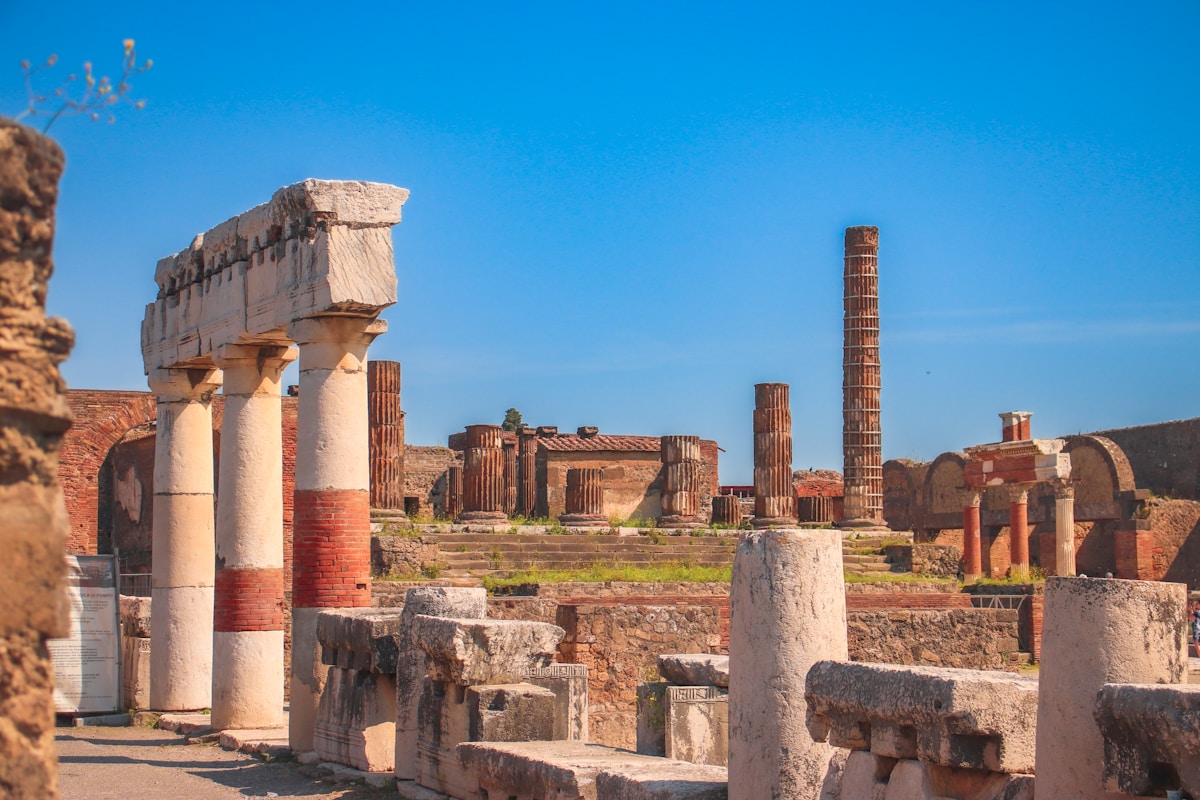
The ancient Roman city buried by Vesuvius in 79 AD is one of the most significant archaeological sites in the world - 66 of the town’s 170 acres are now excavated, and the level of preservation is extraordinary. Streets remain with ruts from cart wheels. Bakeries still have millstones. The Forum, the gladiators’ barracks, the brothel with its painted menus above the doors, the House of the Faun (with its dramatic mosaic-floor entrance hall), and the Villa of the Mysteries with its Dionysian fresco cycle covering an entire room are all walkable within the site.
The Garden of the Fugitives contains plaster casts of the bodies of 13 victims preserved in the volcanic ash - one of the most affecting sights in Italy. The best of the Pompeii finds (including the Alexander Mosaic) are in the Museo Archeologico Nazionale di Napoli rather than at the site itself. If you’re doing Pompeii seriously, the museum in Naples is worth including in a separate visit.
Practical note: Bring water and sunscreen. The site has almost no shade and the summer heat is serious. The café inside the site entrance is overpriced; consider bringing provisions.
Capri
Distance from Sorrento: 25 minutes by hydrofoil, 45 minutes by ferry Transport: Ferries and hydrofoils from Marina Piccola (the main port below Sorrento, reachable by stairs from Piazza Tasso or by taxi). Multiple operators: Navigazione Libera del Golfo, Caremar, SNAV. Approximately €20–25 each way as of 2026. Hours: Services run from approximately 6:30am to 8pm in summer. Last return from Capri is typically 6:30–7pm.
Capri rewards a full day. After arriving at Marina Grande, take the funicular (approximately €2 each way) up to Capri town - a grid of boutiques and restaurants around the Piazzetta (the most expensive café terrace in Italy, approximately €10 for an espresso, but people-watching included). Walk east from the Piazzetta to Villa Jovis (approximately 45 minutes on foot) - the ruins of Tiberius’s main imperial palace, with cliff-edge views across to the Sorrentine peninsula. Entry approximately €6 as of 2026.
From Capri town, take the bus to Anacapri (15 minutes, approximately €2). The chairlift from Anacapri to Monte Solaro (589m, the highest point on the island) takes 13 minutes and provides the finest panoramic view in the Bay of Naples - the Amalfi Coast, Vesuvius, Ischia, Procida, and (on clear days) as far as Calabria. Chairlift approximately €12 return as of 2026.
Blue Grotto: Boats from Marina Grande make the trip to the Grotta Azzurra, a sea cave lit by refracted light that turns the interior an intense blue. The visit is short (3–5 minutes inside) and expensive (rowboat entry approximately €15–18 on top of the boat ticket as of 2026). Worth doing in good weather if time allows, but not essential.
Positano
Distance from Sorrento: 40 minutes by ferry (summer), 60–90 minutes by SITA bus year-round Transport: Ferries from Marina Piccola (approximately €20 each way as of 2026, summer only). SITA bus from Sorrento bus terminal along the SS163 coastal road (approximately €2.50 each way, year-round). The bus journey has spectacular views.
Positano is the most photographed town on the Amalfi Coast - its coloured buildings cascade down the cliff to a beach bordered by the two churches of Santa Maria Assunta (with the mosaic-tiled campanile) and the fishermen’s quarter. The town is also heavily visited, and the main beach fills completely by 10am in summer.
The pleasures of Positano are largely visual. The path up from the lower beach to the upper town takes 20 minutes and reveals progressively better views. The boutiques and restaurants cluster on the Viale Pasitea; the best seafood is at the restaurants a few steps from the beach rather than the more visible establishments on the main drag.
Amalfi
Distance from Sorrento: 75 minutes by ferry (summer), 90 minutes by SITA bus year-round Transport: Ferries from Marina Piccola (approximately €25 each way as of 2026, summer only). SITA bus via Positano (approximately €2.50 each way, year-round).
Amalfi has two primary reasons to visit: the Duomo di Sant’Andrea and the Arab-Norman cloister behind it (Chiostro del Paradiso). The cathedral is 9th-century in origin, rebuilt in the Romanesque-Arab style in the 11th century, with a Baroque facade added in the 19th. The striped marble exterior and the 62-step staircase from the piazza make it the most dramatic church entrance on the coast. Entry to the cloister approximately €5 as of 2026.
The town’s second claim is the Museo della Carta (Museum of Paper) - Amalfi invented European paper-making techniques in the 13th century. The museum is in a medieval paper mill and demonstrates the original stone-hammer production process. Entry approximately €5 as of 2026.
Herculaneum (Ercolano)
Distance from Sorrento: 50 minutes by Circumvesuviana train Transport: Circumvesuviana to Ercolano Scavi station (direction Naples, get off before Pompeii). Approximately €3.50 each way as of 2026. Entry: Approximately €13 as of 2026. Open daily 9am–7pm (summer).
Smaller than Pompeii but often better preserved - Herculaneum was buried under a faster-moving pyroclastic flow that carbonised wood, sealed second-floor structures intact, and preserved materials (furniture, food, fabrics) that didn’t survive at Pompeii. The House of the Bicentenary, the House of Neptune and Amphitrite (with its brilliant mosaic-tiled nymphaeum), and the Palestra (athletic complex) are highlights. The site crowds much less than Pompeii and rewards a half-day rather than a full day.
Mount Vesuvius
Distance from Sorrento: 1 hour 15 minutes by Circumvesuviana to Ercolano, then bus or taxi to the crater Transport: Circumvesuviana to Ercolano Scavi, then Vesuvio Express shuttle bus (approximately €10 each way as of 2026) or taxi to the crater car park. Walk to the summit takes 30–40 minutes from the car park. Entry: Approximately €15 as of 2026 (includes park access). Open daily 9am (closing times vary by season).
The walk to the summit of an active volcano is shorter and easier than most visitors expect - the path from the car park is paved for the first section and takes approximately 30 minutes. The crater is 200m deep and the rim views take in the entire Bay of Naples. The last major eruption was in 1944; the volcano is currently in a period of quiescence but is classified as one of the most dangerous in the world due to the population density around it.
Best combined with Herculaneum rather than Pompeii - both can be done in a day from Sorrento with an early start.
Practical Notes for Day-Tripping
The Circumvesuviana is the key infrastructure - buy tickets at the station before boarding (ticket machines available). Ferries from Marina Piccola should be booked in advance in July and August; operators include NLG and Navigazione Libera del Golfo. The SITA bus along the Amalfi Coast runs year-round but becomes extremely crowded in summer - consider taking the morning ferry and returning by bus to spread the load. All prices quoted are approximate as of 2026 and subject to seasonal variation.
Most day trips from Sorrento are easiest as guided excursions from Sorrento - guided options take care of transport and often include skip-the-line access. If you prefer to self-drive, car hire in Italy gives you maximum flexibility on timing.
Book Sorrento Day Trip Tours on GetYourGuide
| Day Trip | Duration | From price | Highlights |
|---|---|---|---|
| Pompeii and Herculaneum guided tour from Sorrento | Full day | From €55 | Skip-the-line, expert guide, two Roman sites in one day |
| Capri island day trip from Sorrento | Full day | From €79 | Blue Grotto, Augustus Gardens, Faraglioni, funicular ride |
| Amalfi Coast scenic drive from Sorrento | Full day | From €65 | Positano, Amalfi, Ravello, coastal panoramas |